
In recent years, the global bond market has been quite volatile. At the start of the first half of this year, a fierce "sell-and-sell" competition between the US and Chinese bond markets unfolded. Capital, sensing a shift in the tide, is determined to play a "choose one" game, switching back and forth between US and Chinese bonds. The former has become a hot commodity, with foreign investors snapping up it, while holdings of the latter have plummeted.

On the surface, the US and Chinese financial markets appear to be engaged in a fierce battle, but in reality, this is a uniquely capitalist conspiracy. Capital has no regard for loyalty; they pursue only the highest profits. What is the underlying motive? What hidden truths are hidden?
1. Is the US Treasury market flooded with capital, dominating?
With the sharp drop in foreign holdings in China, the narrative of "massive capital flows to the US" has become increasingly prevalent. According to relevant statistics, from May until now, overseas investment institutions have reduced their holdings of Chinese bonds by nearly 500 billion RMB, hitting a record low. This massive move has led outsiders to wonder if the Chinese market is in decline.
After all, US Treasury bonds have been performing strongly recently, attracting a massive influx of capital. Especially after Trump introduced the so-called "Liberation Day" policy, investors have been eager to buy US Treasuries, fearing the impact of global market fluctuations.
At the same time, the UK and Japan have also joined the fray, significantly increasing their holdings of US Treasuries, which have surged by 5% in a short period of time. Currently, foreign holdings of US Treasuries exceed 25%, with foreign holdings reaching nearly $10 trillion in June alone, a staggering amount.
Could it be that a significant amount of global capital has truly flowed into the pockets of the US? The answer isn't actually that. While the total amount of US debt has reached an unprecedented "historic" level, a closer look reveals that this is merely a temporary bout of capital cohesion.
When global trade frictions arise and geopolitical risks intensify, profit-seeking capitalists are forced to seek safe assets. The highly liquid US dollar becomes their "refuge," naturally attracting a surge in buying.
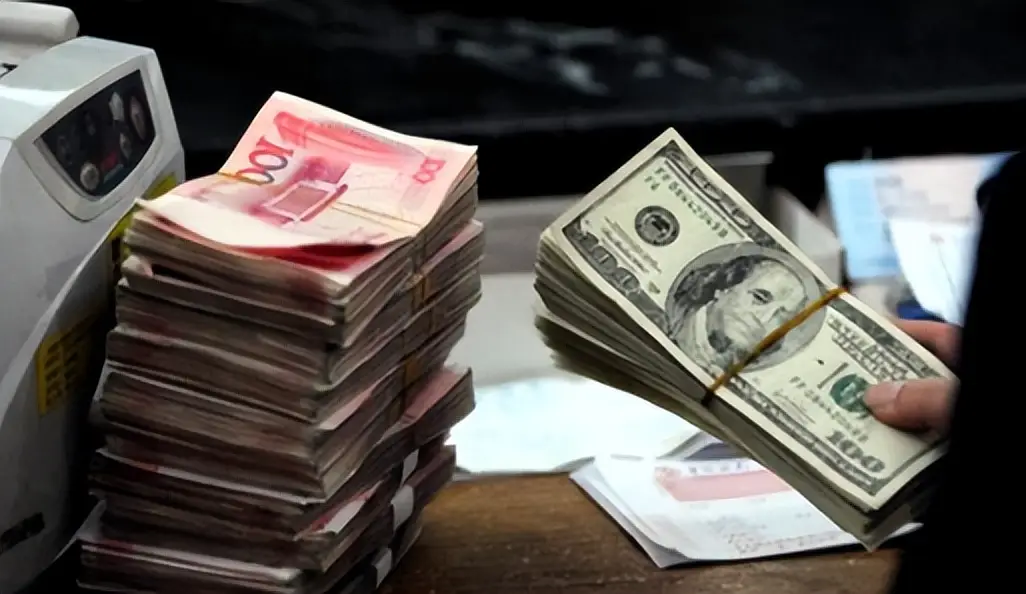
The Chinese bond market, which has been widely criticized, is far from as dire as many claim. The sheer volume of reductions is indeed alarming, but within the context of the vast Chinese bond market, it's a drop in the bucket, barely worth mentioning, and barely even a ripple.
More importantly, US debt hasn't completely absorbed all the capital outflows from the Chinese bond market. Empty statements are far less accurate than the data. In August, the amount flowing into the Chinese bond market accounted for two-thirds of the total international bond market, with the remainder dispersed across Japan, Germany, Canada, and other regions.
In other words, even if the outside world claims that the tide has turned, it can't stop the reverse flow of capital into China. The seemingly aggressive divestment in recent months has been like scratching an itch for China.
Given the strength of the Chinese bond market, why are foreign investors so determined to reduce their holdings and shift to the US? Businesses prioritize profit, and foreign investors prioritize arbitrage trading. Previously, they could profit handsomely from the significant interest rate differential between China and the US. However, since the beginning of this year, China's monetary policy has shifted, economies worldwide have been sluggish, and the Federal Reserve has begun cutting interest rates.
This has significantly narrowed the original interest rate differential. Previously, foreign institutions could engage in speculative activities, purchasing Chinese bonds and profiting from the difference in foreign exchange. But now, not only do they not profit at all, they actually lose a lot of money—a completely unprofitable proposition.
If they can make money, foreign institutions have no reason to invest in the Chinese bond market anymore. They need to make timely business decisions and turn to more attractive markets. While others are busy, China has also continued to reduce its holdings of US debt.
2. Compared to the US Treasury market, Chinese bonds are more resilient to pressure.
Many people only see the prosperity of the US Treasury market, ignoring its inherent risks and challenges. Trump's "reciprocal tariffs" failed to split the Chinese market, but instead created a "crack" in the US Treasury market. Suddenly, the US suffered a triple blow, and even the status of its Treasury bonds, accumulated over many years, was questioned.
Initially, the Trump administration intended to achieve its goals through high tariffs that imposed price premiums. Unexpectedly, these high tariffs triggered a negative supply shock, sending US prices skyrocketing and making life even more difficult for ordinary people. Furthermore, the US fiscal deficit was already in an awkward position at the time, and this move undoubtedly exacerbated market volatility.
To drive down US Treasury yields and alleviate the current difficulties, the Federal Reserve was forced to slow down and cut interest rates. Under the dual pressures of inflation and debt, Trump had to use the signal of a "strong dollar" to "entice" foreign investors, using both soft and hard tactics to help the US escape its predicament.
China, recognizing the potential risks in the U.S. Treasury market and fully aware of its impending steepening trend, began preparing early. U.S. Treasuries represent a long-term strategic investment for China. As of last month, China's holdings of U.S. Treasuries had reached a historic low.
China has also reduced its holdings of bonds from other Western countries, totaling $12 billion. It has reallocated the released funds to other sectors, such as gold, which has recently seen a surge in appreciation.
In today's financial markets, China's gradual reduction demonstrates its uniquely mature strategy and relatively prudent monetary policy. At the end of September, China introduced a new policy allowing foreign investment in the repo market. This measure has significantly increased the issuance of RMB bonds in Hong Kong and provided more convenient cross-border payment channels for the international community.
Whoever truly masters risk hedging will seize the initiative in the global economy. China's economic resilience remains. Both policy measures addressing key issues and the total cross-border use of RMB have reached a high level and high standards. This is precisely the confidence of tens of millions of Chinese people and the driving force behind the nation's development.
Summary:
Although US Treasuries have attracted a significant amount of foreign investment in the short term, from a long-term perspective, the RMB offers greater stability. The market will eventually recover, and the correction will subside. As long as we withstand the pressure and avoid a collapse, the road ahead will surely become smoother.
This bond turmoil affects not only China and the United States but also global capital. Will global capital then return to equilibrium, determining its ultimate direction?