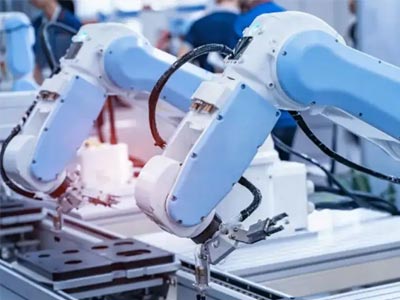
On October 8, Swiss company ABB announced the sale of its robotics business to Japan's SoftBank Group for US$5.375 billion.
As one of the "four major" industrial robot companies, ABB's industrial robots rank second in the global market.
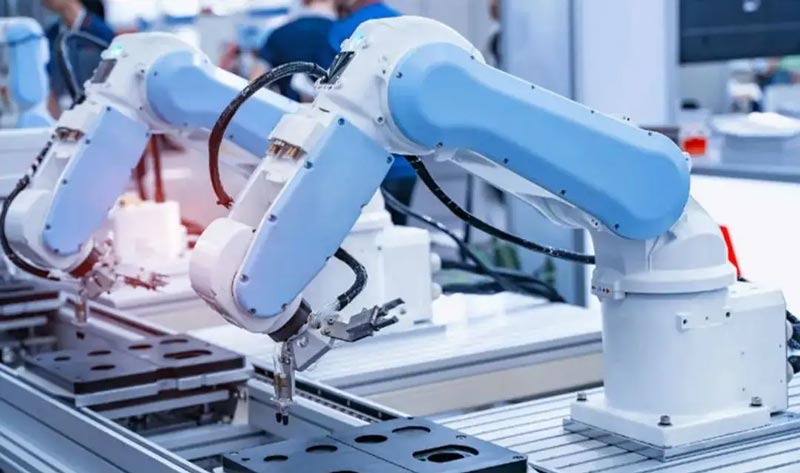
Why did ABB sell its robotics business to Japan's SoftBank?
Does it spell the end of European manufacturing?
01. ABB industrial robots are truly renowned.
ABB, the parent company, is a leading global company in electrical equipment and automation technology, headquartered in Zurich, Switzerland, and ranked among the Fortune Global 500.
The world's first fully electronically controlled industrial robot originated from the ABB Group. ABB, along with FANUC, Yaskawa Electric, and Kuka, is known as one of the "Four Major Families" of industrial robots globally.
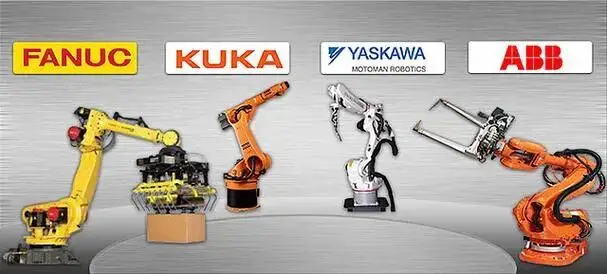
The "Four Major Families" of Industrial Robots
In 2024, ABB's industrial robot sales revenue reached $2.3 billion, ranking second in global market share.
Given its deep foundation and industry leadership, why would ABB sell its industrial robotics business?
To the outside world, industrial robots may seem glamorous, but within ABB, they are somewhat of a "useless" business.
The ABB Group currently has four divisions: Electrification, Motion Control, Process Automation, and Robotics & Discrete Automation.
Of these, the industrial robotics business accounts for only 7% of the group's total revenue, a relatively small contribution.
The latest financial report shows that in the second quarter of 2025, ABB's operating EBITDA margin increased to 19.2%, while the Robotics & Discrete Automation division's operating EBITDA margin was only 12.1%.
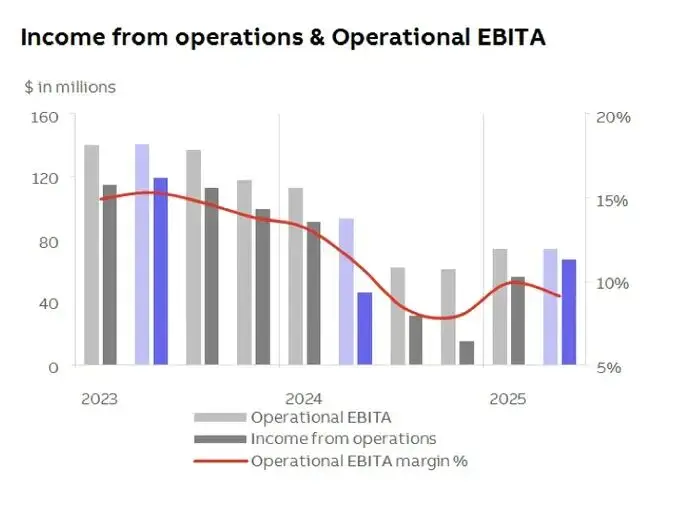
Image Source: ABB Q2 2025 Report
Although ABB's industrial robotics business ranks second globally, its scale and profit margins lag within the group. The capital market often assigns a "group discount" to large, complex conglomerates, assuming their overall value is less than the sum of its parts.
For example, ABB's industrial robots, a global market strength, became a weak link after being integrated into the group's core structure.
02. Spin-off and Sale
Based on this strategic consideration, ABB Group considered spinning off its industrial robotics business.
On the one hand, an independent robotics company would have greater flexibility, attracting investors focused on high-tech and automation sectors, and thus achieving a higher valuation.
On the other hand, the new ABB Group would be more focused on its three core businesses: electrical, motion control, and process automation. This would create clearer business lines and greater synergies, and its overall profit structure and capital market performance would be expected to improve further.
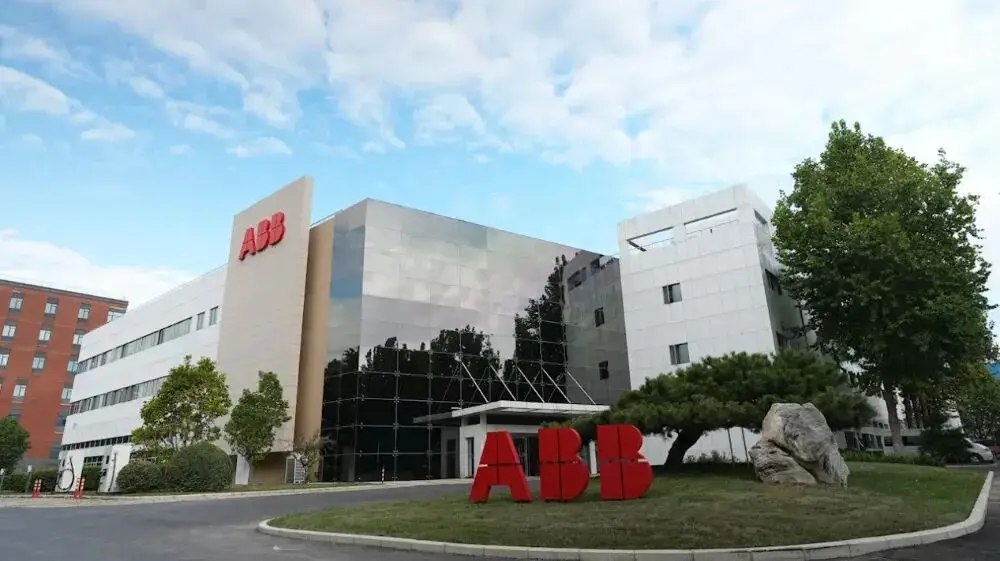
In April 2025, ABB announced plans to spin off its industrial robotics business 100%, with the goal of establishing it as an independent, publicly listed company by the second quarter of 2026.
Now, ABB Group has abandoned the spin-off and sold it to Japan's SoftBank for a very practical reason: the offer was too high.
Swiss investment bank analysis estimates that if spun off and listed, the valuation of ABB's robotics business would be under $4 billion.
SoftBank's direct offer of $5.375 billion for the transaction was significantly higher than market expectations, making it a truly "generous" deal.
How can future valuations compare to the hard cash in hand?
Faced with such a generous cash offer, it would be difficult for ABB Group to refuse this more certain transaction.
Does ABB's sale of its industrial robotics business signal the failure of European manufacturing?
In fact, business spinoffs by European companies are not isolated cases.
Almost simultaneously, German chemical giant BASF announced the divestiture of its coatings business at a valuation of €7.7 billion, establishing a joint venture with Carlyle Group and the Qatar Investment Authority.
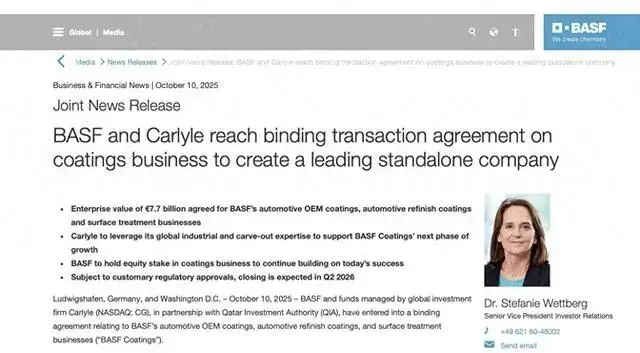
BASF Official Website News
In April of this year, Continental AG officially announced the spinoff of its industrial technology division, ContiTech, into an independent company.
In May 2024, Siemens sold its motor and large drive business, Inmonda, to the private equity firm KPS for €3.5 billion, halting its planned independent listing.
In December 2024, Michelin of France sold Camso's off-highway bias tire and track business to India's SEAT.
Similar to ABB's sale of its industrial robotics business, these companies divested non-core businesses primarily to concentrate limited financial and technological resources on high-value-added areas, essentially "subtracting" to strengthen core competitiveness.
Some spin-offs were driven by the logic of capital efficiency and maximizing shareholder value.
Thus, business spin-offs are by no means a sign of "manufacturing failure."
03. Challenges and Tickets
The key to judging the true competitiveness of European manufacturing lies not in whether a spin-off is necessary, but in whether the divested business itself remains globally competitive.
Examining ABB's sale of industrial robots from this perspective reveals a different perspective on the industry.
ABB is facing challenges in the global industrial robotics market.
According to operating data, ABB's robotics business profit declined 39% year-on-year in 2024. In the second fiscal year of 2025, ABB's Robotics and Discrete Automation division saw a year-on-year decline in revenue, with operating EBITDA falling 20% to $74 million and profit margins dropping from 11.1% to 9.1%.
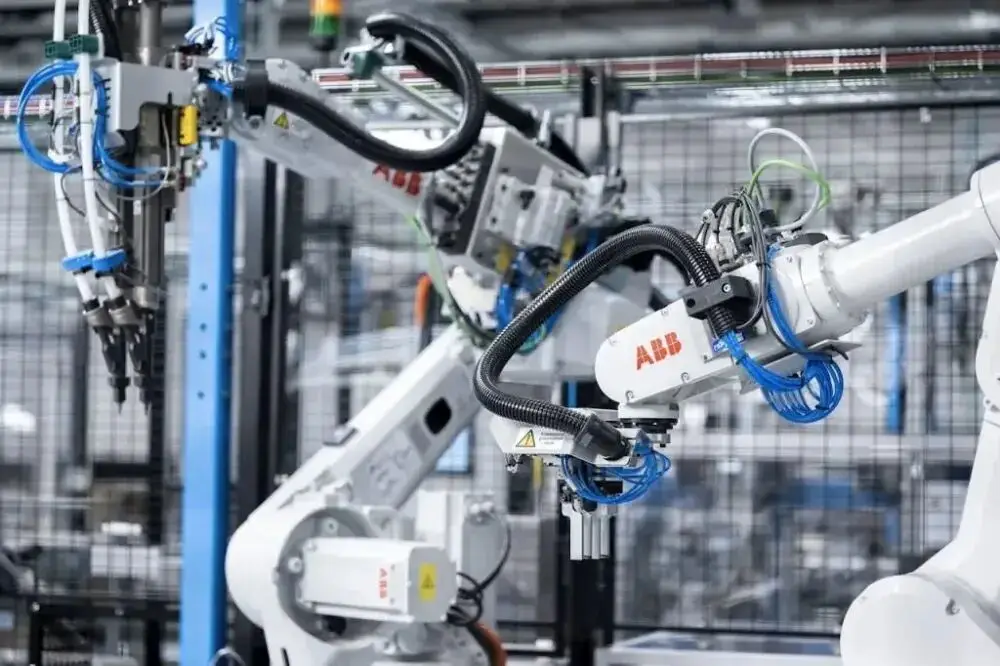
ABB CEO Velode stated publicly:
We have consistently emphasized that the robotics market is highly volatile. This market differs slightly from ABB's other businesses currently focused on electrification and automation.
This statement implies two core principles:
- The robotics market is more sensitive to the macroeconomic environment, and external economic fluctuations are more likely to directly affect business performance;
- Competition in the robotics market is fierce, and ABB's robotics business is being squeezed by competitors.
Take the Chinese market as an example. China is the world's largest market for robotics applications. In 2024, the annual installed base of industrial robots reached 295,000 units, accounting for 54% of the global total, firmly ranking first worldwide.
With the rise of local companies such as Estun and Inovance Technology, the market share of domestically produced robots continues to increase, and the competitive landscape in the industry is undergoing a structural shift. Data from authoritative organizations such as MIR DATABANK indicate that in the first half of 2025, Estun's industrial robot market share reached 10.5% (including its subsidiary brand Estun Coolzhuo), ranking first in the Chinese robotics market for two consecutive quarters. For the first time, Estun surpassed foreign brands in industrial robot shipments in the domestic market, becoming the first domestic company to top the Chinese industrial robot solutions market.
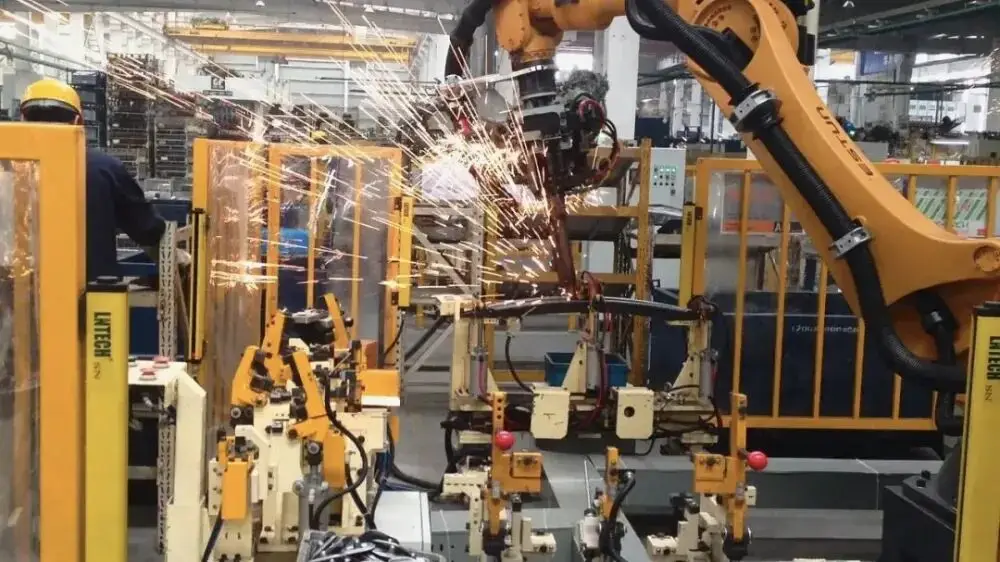
This breakthrough not only demonstrates that domestic robots have the technological maturity and adaptability to meet the needs of foreign brands, but also highlights the unique advantages of domestic companies in cost control, responsiveness, and localized services.
Amid the rapid growth of domestic players, the competitive landscape of "one gaining, the other losing" is putting pressure on foreign industrial robot companies, particularly ABB.
This erosion of competition is putting considerable pressure on foreign industrial robot companies, including ABB.
ABB's divestment of its industrial robot business is a conscious decision to respond to global competition, but it will also subtly impact European manufacturing.
In particular, as early as 2017, Germany's Kuka, also one of the "Big Four" companies, was acquired by China's Midea. At this point, two leading European companies, once prominent in the global industrial robotics sector, have divested or resold their core robotics businesses.
In the era of intelligent manufacturing, industrial robots have long transcended the simple function of "automation tools" and have become a core indicator of a country's manufacturing competitiveness, a crucial ticket to unlocking future industries.
The successive "letting go" of industrial robots by European companies reflects the fatigue of the European manufacturing sector.