
On October 23rd, Google announced a major algorithmic breakthrough. Using its latest-generation quantum chip, Willow, the research team successfully ran a verifiable algorithm on a quantum computer in hardware for the first time. Compared to supercomputers, the quantum computer is approximately 13,000 times faster. The related research graced the cover of the leading academic journal Nature.
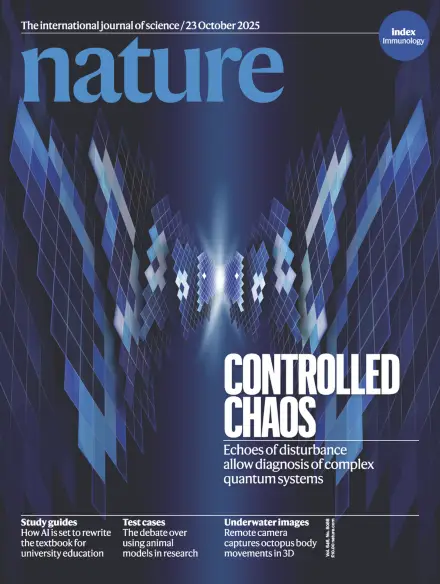
▲Nature cover
Last December, Google announced the launch of its Willow quantum chip, built from superconducting quantum circuits. Superconducting quantum circuits—a field of quantum physics that began with the groundbreaking discovery of macroscopic quantum effects in 1985—earned John Clarke, Michel H. Devoret, and John M. Martinis the 2025 Nobel Prize in Physics for their contributions.
The Google Quantum AI team's paper features the name of new Nobel laureate and Chief Scientist of Google's Quantum AI division, Devoret, as an author.

▲Michel H. Devoret (Source: Nobel Prize official website)
This paper demonstrates a novel "Quantum Echoes" algorithm, the core of which is measuring the expectation value of a quantum observable, known as an Out-of-Time-Ordered Correlator (OTOC).
This observable can be verified by another quantum computer or a natural quantum system and surpasses the simulation capabilities of known classical algorithms.
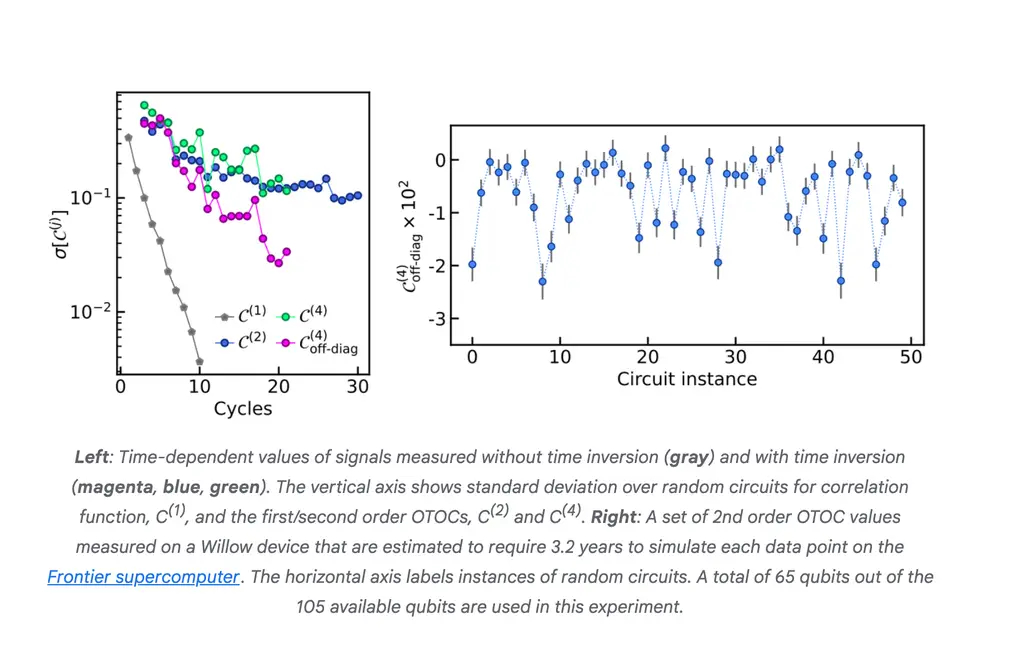
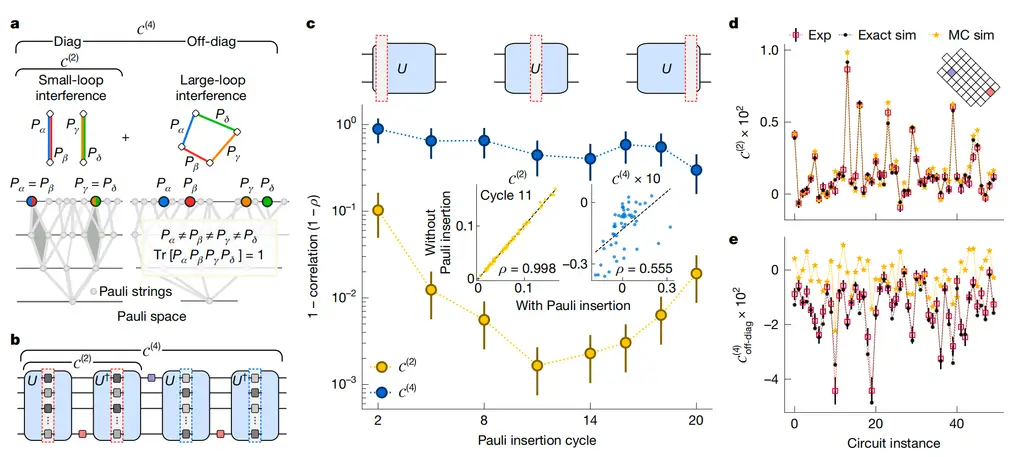
Google's Quantum AI team ran a "Quantum Echoes" experiment on the Willow quantum chip, measuring fluctuations in different observables between circuit instances. The researchers found that high-order OTOCs can maintain long-term sensitivity to microscopic details of quantum dynamics.
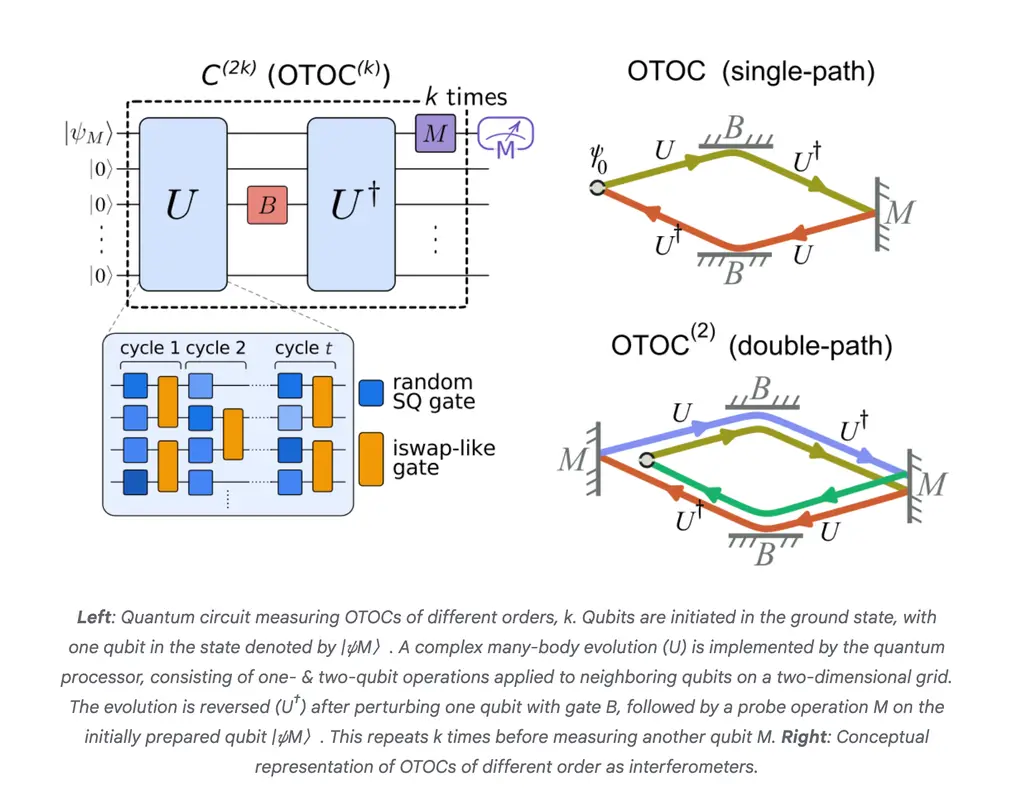
The team also found that high-order OTOCs can capture quantum interference effects, demonstrating a significant advantage in signal-to-noise ratio (SNR) compared to classical algorithms. Their experiment on Willow took approximately two hours, while a conventional supercomputer would take an estimated 13,000 times longer.
Sundar Pichai, CEO of Google and its parent company, Alphabet, said: "This new algorithm can use nuclear magnetic resonance to interpret the interactions between atoms in molecules, paving the way for potential future applications in drug development and materials science."
I. Top-Performing Quantum Chips Help Google Achieve the Most Complex Quantum Computing Experiment Ever
Over the past four decades, driven by mature integrated circuit manufacturing technology and active research in academia and industry, superconducting qubits have demonstrated an exceptional balance between performance and scalability, making superconducting quantum circuits the preferred platform for building fault-tolerant quantum computers.
Building on this foundation, Google aims to make quantum computing deliver practical value in a complex application.
The "Quantum Echoes" algorithm relies on reversing the direction of quantum data flow within a quantum computer, which in turn places stringent system-level performance demands on the Willow chip—running a large number of quantum gates and performing numerous quantum measurements, both of which are key to extracting useful signals from background noise.
After continuous optimization, the current generation of Willow chips achieves industry-leading scalable computing performance.
Across its 105-qubit array, single-qubit gates achieve a fidelity of 99.97%, entangled gates achieve a fidelity of 99.88%, and readouts achieve a fidelity of 99.5%. All operations operate at groundbreaking speeds of tens to hundreds of nanoseconds.
These high-precision quantum gates enable Google to execute the highly complex Quantum Echoes algorithm, which involves large-scale quantum interference and entanglement.
This advances research results to a level beyond the computing power of conventional computers.
In addition to its precision advantages, the Willow chip can complete millions of Quantum Echoes measurements in just tens of seconds. This speed enabled the project to complete one trillion measurements, a significant fraction of the total number of measurements performed on all quantum computers to date, making it one of the most complex experiments in quantum computing history.
II. Google's Quantum Strategic Path: Building a Fault-Tolerant Quantum Computer
Since its inception, the Google Quantum AI team has consistently adhered to a strategic roadmap, with the long-term vision of building a large-scale, fault-tolerant quantum computer.
Google has already achieved two milestones: completing "superclassical quantum computing" in 2019 and achieving a "quantum error correction prototype" in 2023.
With the release of the Willow quantum chip in 2024, Google's strategic roadmap has taken another step forward: successfully demonstrating sub-threshold quantum error correction, moving toward the third milestone.
This verifiable demonstration of quantum advantage marks another key advancement for Google's Quantum AI team.
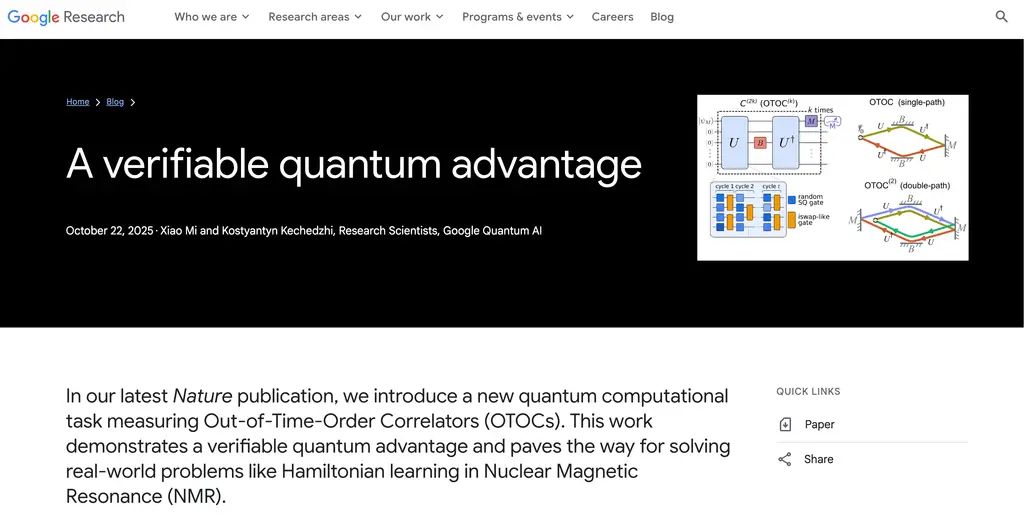
▲Post by the Google Quantum AI Team (Source: Google Research)
Google's next milestone is long-lived logical qubits. Achieving this goal will require further orders of magnitude improvements in system performance and scale, and the development and refinement of millions of key components.
Conclusion: Quantum Computing is Moving Toward Practical Applications
The successful completion of the "Quantum Echoes" quantum computing experiment was made possible by Google's hardware advancements—the breakthrough of the Willow quantum chip. Currently, the Google Quantum AI team is moving toward large-scale, complex quantum computing using superconducting qubits. Google's Quantum AI team stated: "This path will lead to some of the first practical applications of quantum computing."