Trump's announcement of "100% tariffs plus software controls" instantly sent global markets into chaos: US stocks, bonds, and currencies suffered a triple blow. The Nasdaq and S&P 500 suffered their worst single-day performances since April, Bitcoin followed suit, and international oil prices collapsed due to the combined effects of "declining demand and increasing supply."
Yet, amidst this chaos, Chinese exports have defied the trend and are rising. The world is panicking. Why has China been able to withstand this?
The Transmission Logic from the US Stock Market Plunge to the Falling Oil Prices
As soon as Trump announced the 100% tariffs and software controls, global markets immediately rippled like dominoes, from the US mainland all the way to international commodities, shaking every link. China clearly felt the interconnectedness of the global economy, with any single move affecting the entire system.
The US financial markets were the first to suffer, with a sudden "triple blow" of stocks, bonds, and currencies. The Nasdaq and S&P 500 indexes saw their largest single-day declines since April 10th. Chinese concept stocks, directly affected by the tariffs, suffered the most.
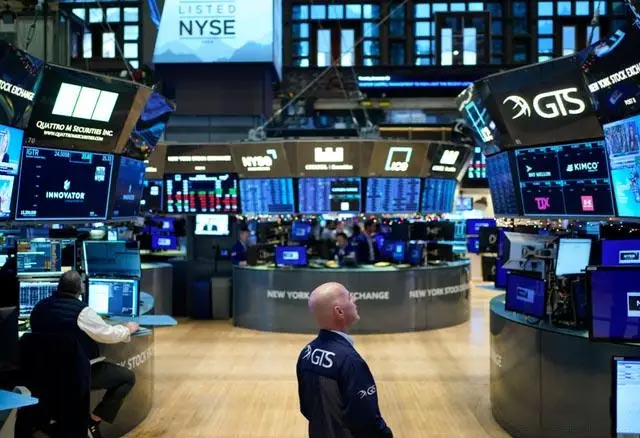
The bond and foreign exchange markets weren't much better. Investors began to worry about the future of the US economy. Not only traditional markets, but even cryptocurrencies like Bitcoin followed suit. Both established and emerging financial markets were falling. To put it bluntly, everyone was panicking due to uncertainty about policy.
This panic quickly spread to the international commodity market, with the sharp drop in international oil prices being the most typical example. From the demand side, China, with Trump's tariffs, felt that as the core of global manufacturing and with industries dependent on Sino-US trade, demand for crude oil would inevitably decline.
Once demand expectations fell in major oil-consuming sectors like chemicals and transportation, confidence in the crude oil market immediately eroded. On the supply side, the ceasefire in Gaza in the Middle East eased previous geopolitical concerns, with Israel gaining the upper hand in the conflict and regional tensions easing.
Additionally, OPEC and other oil-producing countries in the Americas were expected to increase production. With the potential for low demand and the need for increased production, the crude oil market was caught between "declining demand and high supply," ultimately leading to a sharp drop.
Another interesting point: gold, the safe-haven asset, actually rose this time, with its price nearly reaching $4,000 an ounce. Money was flowing from riskier assets into gold. This wasn't just a sign of investors avoiding risk; it also indicated widespread concern about escalating Sino-US trade frictions. After all, China and the United States are the world's two largest economies. The direction of their trade relationship directly impacts the stability of the global industrial chain. Any unilateral policy could disrupt the global economic recovery, which is the fundamental reason for the market's panic.
Structural Optimization and Competitive Upgrading Behind Resilience
While the global market was in turmoil due to tariffs, China's exports have shown a "counter-trend upward trend." This resilience is no coincidence. Simply put, it stems from a more rational export market structure, improved product competitiveness, and a quicker response to external changes, enabling it to withstand pressure.
First, looking at the distribution of export markets, China has long since moved beyond focusing solely on the United States and has found multiple "backers." This has become China's first line of defense against tariff shocks.
Next, consider product competitiveness. This is the core of China's export resilience. From March to August of this year, China's export price index fluctuated within a narrow range between 96 and 101, maintaining overall stability and significantly outperforming the EU, Japan, and South Korea.
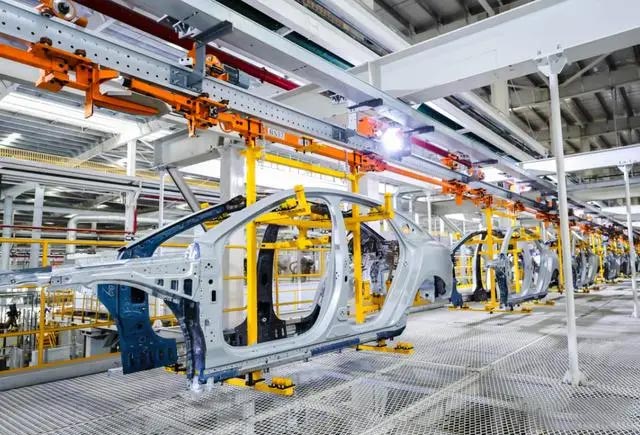
Behind this data lies the transformation of Chinese manufacturing. It used to be "cheap but mediocre quality," then became "good and cheap," and now it's even more impressive, achieving "high quality at a competitive price." Take new energy vehicles, for example. Chinese automakers, leveraging battery technology and intelligent technology, are selling increasingly large quantities globally, becoming the main driver of export growth. With more of these high-value-added products, the export price index is naturally stable, unaffected by external fluctuations.
More importantly, according to common sense, an appreciation of the RMB would make Chinese products more expensive abroad, making exports more difficult.
But in recent months, Chinese exports have actually increased. What does this indicate? China's export growth has long ceased to rely on a favorable exchange rate, but rather on the competitiveness of the products themselves, the stability of the supply chain, and the ability to quickly meet market demand. This kind of growth driven by strength is far more reliable than growth based on exchange rates and can go further.

From Policy Confrontation to a Contest of Strategic Thinking
Trump's tariffs this time ultimately represent a new phase in the Sino-US trade war. Unlike China's passive defense in April, this time China took the initiative. Whether it's regulating drone technology, collecting special port fees for ships, or upgrading rare earth controls, they all precisely hit key US concerns.
Rare earths are key materials for the US high-tech and defense industries, and collecting port fees directly impacts the costs of US shipping companies. These actions are not only targeted but also demonstrate that China understands its strengths. This shift from passive defense to active attack demonstrates China's confidence in its own strength and its increasing sophistication in the trade war.

Looking at the US, Trump's policies are driven by both political calculations and personal interests. Politically, he aims to gain the upper hand in Sino-US trade through tariffs and controls, forcing China to make concessions, while also trying to curry favor with some in his own country.
Personally, he already loves stock trading and has already made some money in the market. This time, with the policy push to drive the market down, perhaps he's waiting for prices to fall before buying again—what's commonly known in China as "building a position at a low point."
Tying personal stock trading to national policy makes the policy less stable and less scientific. This not only further turbulent markets but also diminishes the US's credibility in global trade. After all, if policies are tainted with personal whims, they can severely damage the global industrial chain.
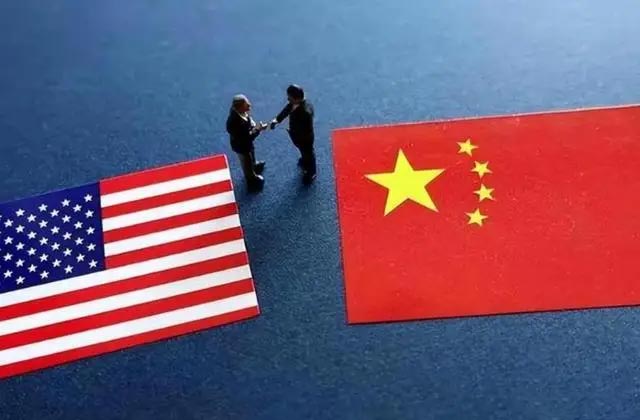
What needs to be understood is that the core of the Sino-US competition isn't "who wins and who loses," but whether they can find a way to coexist that's consistent with global economic development. China has a complete industrial chain, strong manufacturing capabilities, and a vast market; the US has advantages in technology and finance.
If China and the United States can stop confronting each other and sit down to have a good talk, it will not only stabilize the global industrial chain, but also help the global economy recover faster. If frictions continue to escalate, it will only make the cost of the global economy higher and higher, the market more and more chaotic, and everyone will suffer in the end. Whether China and the United States can find a balance in the future will not only affect the economies of China and the United States, but will also affect the direction of the global economy.