
The Five-hundred-meter Aperture Spherical Radio Telescope (FAST) has made another big splash. It wasn't the discovery of aliens or the reception of galactic signals, but the capture of a "millisecond radio burst" from a starspot region—a cosmic whisper almost inaudible to humans. Simply put, amidst the vast sea of stars, Chinese ears suddenly heard an extremely brief and mysterious "pop." Scientists were stunned; this was the "quantum gossip" of astronomy.
This time, the team behind this monumental feat was led by Professor Tian Hui of Peking University. They used the world's most sensitive and largest telescope, FAST. Nestled in a valley in Guizhou, it resembles a giant silver bowl resting on Earth's surface, quietly listening to the universe's breath. This time, it detected a signal from a sunspot region on the surface of a star, similar to a sunspot. The problem is, humans have never directly heard signals from such a region before, let alone a "millisecond-scale" flash.
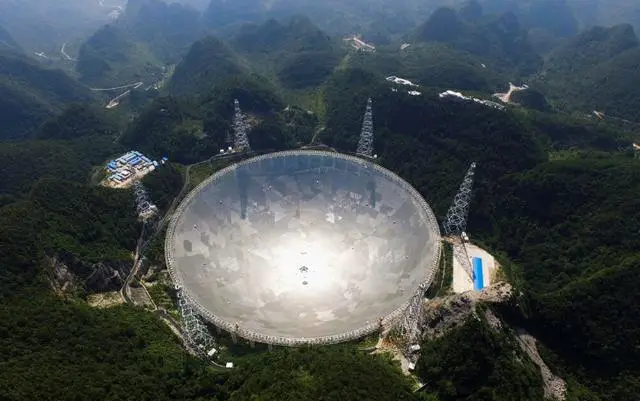
Just imagine how incredible this timescale is. Previous observations had a resolution of minutes, barely enough to tell if a star had a fever. Now, FAST has achieved sub-millisecond resolution—the equivalent of watching the sunrise in slow motion, while we've captured the sun sneezing. The sunspot region, upon listening, emitted a high-energy radio pulse, a "stellar-level discharge." The significance of this signal is like hearing a baby's heartbeat for the first time—it means humans can finally "understand" the inner workings of stars.
Scientists offer a very rational explanation: This suggests that magnetic activity in star-spot regions can accelerate electrons to extremely high energies, producing unique radiation signatures. By analyzing these signals, we can directly measure the microscopic magnetic field structure on the star's surface. It sounds a bit academic, but from another perspective, this is the first time humans have used hearing to "peek" at the electrical currents beneath the surface of a star. Previously, we could only guess, but now we can finally hear for sure.
The key is that only China can do this. FAST's sensitivity is dozens of times greater than that of other radio telescopes. Equipment from other countries can't even detect the slightest hint of this signal. It can be said that this is the first time in human history that electromagnetic activity in a star-spot region has been "confirmed," and this confirmation is made in China.
What does this mean? It means that we are no longer just "stargazers" but have truly begun to "listen to the stars." The magnetic activity of stars determines the solar wind, cosmic rays, and the habitability of planets. In short, the mood of a star influences the climate of the universe. This discovery is like finally installing an "emotion sensor." Being able to sense when a star is angry or calm is the ultimate powerhouse of future astronomy.

Think this is unpopular scientific research?
Wrong. This is the "nuclear button" of the universe. Whoever understands stellar magnetic fields can more accurately predict solar eruptions, monitor space weather, and ultimately protect satellites, power grids, and spacecraft. Imagine if the US GPS system suddenly fails due to interference from the solar wind, while China, having detected the sunspot uprising in advance, takes proactive measures. This isn't just a scientific breakthrough, but a strategic gap.
Some say this is why FAST is worth every penny. It's not observing "aliens" but observing "ourselves," observing the connection between the fate of the universe and Earth. That "pop" could be the collapse of magnetic field lines within a star, or it could be the first time our civilization truly understands the pulse of the universe. It's not a cold signal, but a cosmic greeting.
It's quite romantic to think about it: a star sneezes on the other side of the universe, and a Chinese telescope, hundreds of light-years away on Earth, hears it. Then, in the laboratory, several scientists hold their breath, excited by those few milliseconds of data, as if they've won the lottery. The romance of scientific research often lies in moments like "humanity heard the first cosmic cough."
But don't be too artistic. Behind this lies incredibly hardcore technology. FAST's antenna precision is controlled to the millimeter level, and its signal processing generates hundreds of gigabytes of data per second. Not only ordinary countries, but even established space powers have to look up to it. This system can now capture transient signals at the submillisecond level, making it the ultimate form of cosmic stethoscope. There's hardly anyone else in the world who can do this. This is true "technological confidence"—not just slogans, but the ability to hear sounds others can't.
Interestingly, when foreign media reported this, their tone was incredibly subtle. The BBC declared, "China's FAST makes a rare stellar detection," as if they were "afraid to admit it but must report it." They understood this meant China was not only leading in engineering scale, but also beginning to "define the frontier" in basic science. In the past, we learned from others in telescopes; now others want to study how we achieved it.
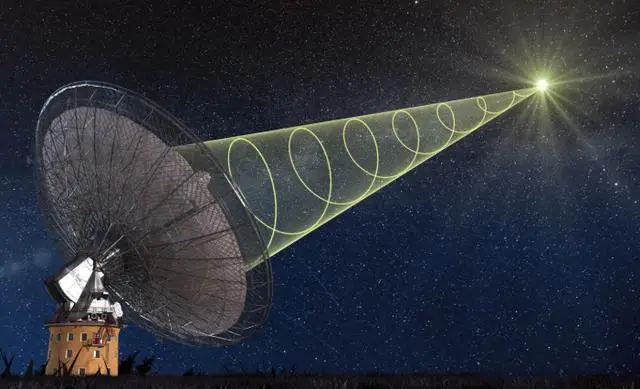
You can sense the sense of a "reversal of times." Decades ago, the "center" of astronomy was in California, Hawaii, and Chile. Today, the latest cosmic signal first reached the valleys of Guizhou. This "reversal of information flow" is the true power of the moment. The center of gravity of knowledge and observation is shifting from west to east. Quietly, yet powerfully, it could reshape the future of science.
Even more fascinatingly, this discovery is just the beginning. The FAST team is as excited as if they've opened a new map: starspots are just the first stop. Next, they'll focus on stellar eruptions, planetary magnetic storms, and perhaps even uncover the evolutionary mechanisms of "solar-like" systems. In other words, FAST isn't just "listening"; it could be rewriting the textbook on cosmology.
And there's a touching detail behind this: Professor Tian Hui said, "FAST's success lies in its patience." This patience isn't just a few years of project time, but decades of accumulation. From design to construction to debugging, every precision and every algorithm has been meticulously refined by Chinese scientists. This isn't a random burst of national momentum, but the result of long-term, rational accumulation. You could say this is the true voice of Chinese scientific research.
Humanity's first capture of the sound of starspots may sound like a science fiction title, but the reality is far more romantic—we are, with our own hands, adding a microphone to the universe. We once looked up at the stars; now we listen. By understanding their language, perhaps we can understand our place in this vast universe.
FAST's silver bowl still stands quietly among the mountains of Guizhou. Every night, as we fall asleep, it listens. It listens to whispers from billions of kilometers away, to the heartbeats of the deep universe. Perhaps one day, it will truly hear the call of some "alien civilization." But until then, it has already helped humanity rediscover the stars and ourselves.