
On October 21st, in the first round of the House of Representatives Prime Minister nomination election, Liberal Democratic Party President Takaichi Sanae secured a majority of votes, becoming Japan's 104th Prime Minister.
Takaichi Sanae's election also makes her the first female Prime Minister in Japanese history. She is 64 years old and a leading figure in right-wing Japanese politics, advocating for expansionary fiscal policy and increased defense spending.
Although Japanese law generally provides equal power between the House of Councillors and the House of Representatives, the House of Representatives has prior decision-making authority over legislation and the appointment and removal of the Prime Minister. When there is a disagreement between the two houses on the Prime Minister's nomination, a bicameral meeting will be held. If the meeting still fails to reach a consensus, the House of Representatives' nomination will take precedence, as stipulated in the Japanese Constitution.
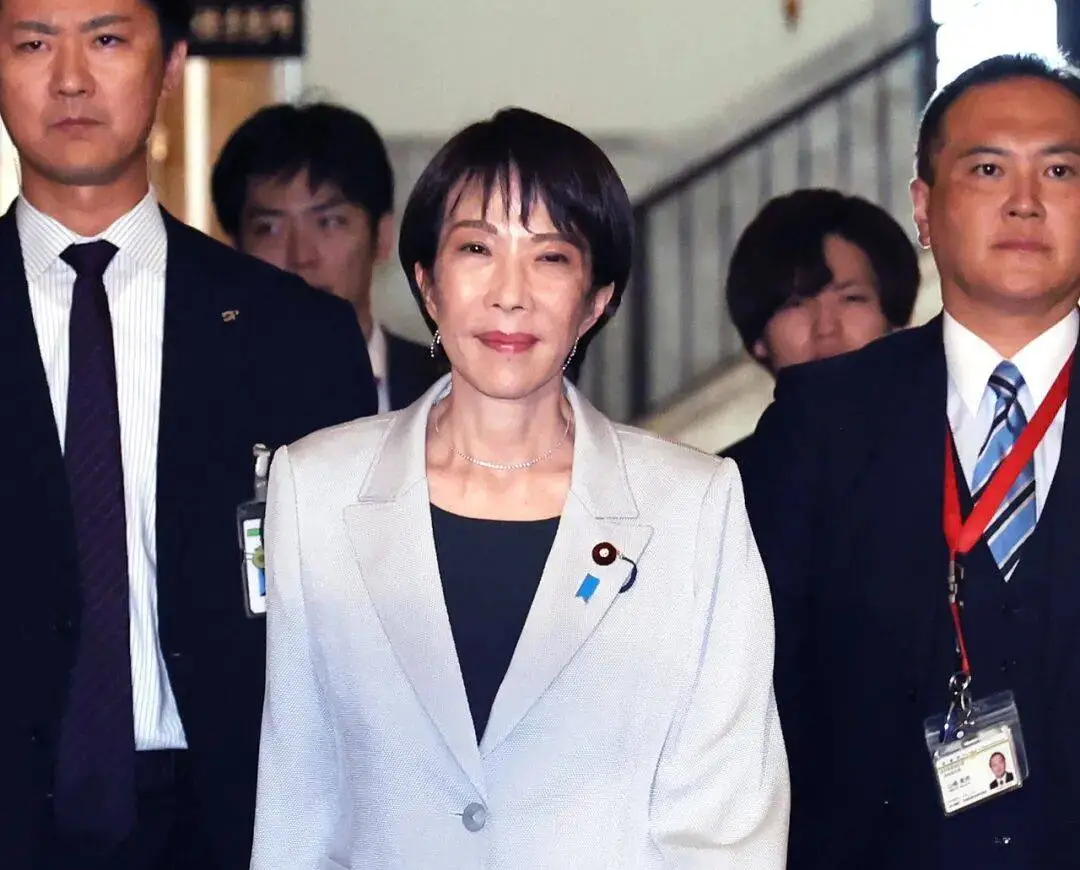
Takaichi Sanae, President of the Liberal Democratic Party of Japan (File Photo)
01. The Tortuous Road to Prime Ministership
After being elected as LDP president on October 4th, Takaichi Sanae's path to prime ministership was fraught with uncertainty due to the collapse of the ruling coalition and joint opposition opposition.
Originally, within the ruling coalition of the LDP and Komeito, Takaichi Sanae was only one hurdle away from the prime ministerial election: the nomination. At the time, Japanese media generally believed that this step was merely a formality, and she enthusiastically announced her policy plans for her future as prime minister.
However, the situation took a sudden turn on October 10th. Prior to the LDP presidential election, the Komeito Party had stated that, given Takaichi Sanae's extreme right-wing stance, it would not rule out the possibility of leaving the ruling coalition.
That day, after a meeting between the LDP and Komeito presidents, Komeito announced its withdrawal from the coalition due to significant policy differences, thus disintegrating the 26-year-long LDP-Komeito coalition. Komeito leader Tetsuo Saito explicitly stated that Takaichi Sanae's name would never appear on the ballot.
Then, the "opposition grand coalition," led by the Constitutional Democratic Party of Japan (CDP), the largest opposition party, moved from initial conception to formal integration. Democratic Party for the People leader Yuichiro Tamaki also declared, "I am ready to serve as Japan's prime minister," catapulting him into the leading candidate. Overnight, the prime ministerial nomination, once considered a formality, escalated into a fiercely contested race, with Japanese media noting that such a scene had not been seen in years.
Ultimately, thanks to the LDP's deep roots and the apparent unity within the opposition coalition, Takaichi Sanae narrowly escaped victory, becoming Japan's first female prime minister.
02. Extreme right-wing stance, known as the "female Abe"
Takaichi Sanae was born in 1961 to a modest family in Nara Prefecture, Japan. After graduating from Kobe University, she entered the prestigious Matsushita School of Politics and Economics. She then studied in the United States and, upon returning to Japan, worked as a television anchor and university professor. In 1993, Takaichi Sanae was first elected to the House of Representatives, officially entering Japanese politics. She has a close relationship with former Prime Minister Shinzo Abe, and their shared policy philosophies have earned her the nickname "Female Abe" in the Japanese media. Abe's strong support was a key factor in her political rise.
In 2006, when Abe first became prime minister, Takaichi Sanae joined the cabinet for the first time, serving as Minister of State for Special Missions in the Cabinet Office. In 2014, she was appointed Minister of Internal Affairs and Communications, becoming not only the first female minister of internal affairs and communications but also the longest-serving minister to date.
Takaichi Sanae's political stance is extremely conservative and right-leaning. While serving as a cabinet minister, she has visited the Yasukuni Shrine, where Class A war criminals from World War II are enshrined, several times, most recently on August 15, 2025, the day of Japan's surrender.
In military matters, Takaichi Sanae advocates for a complete overturning of the pacifist constitution and for greater authority for the Self-Defense Forces. She openly advocates amending Article 9 of Japan's pacifist Constitution, attempting to restore Japan's right to declare war and achieve so-called "normalization of the country."
Takaichi Sanae advocates a significant increase in the defense budget, the implementation of "collective self-defense rights," and strengthening the ability to strike enemy bases. Analysts point out that this substantial expansion of Japan's external military role deviates significantly from its traditional "purely defensive" stance.
03. Completely "Lame" Faces Severe Internal and External Challenges
Although she narrowly escaped this crisis, Takaichi Sanae faces multiple challenges: the collapse of the ruling coalition, a lack of seats in the Diet, and a fragile foundation within the LDP.
First, the collapse of the LDP-Komeito alliance will deal a severe blow to the LDP's ruling position. The LDP is already "completely lame" in the Diet, making it even more difficult to pass major policies. Takaichi Sanae will have to seek cooperation with various parties, a task that her far-right background may make even more difficult. Meanwhile, Takaichi Sanae's failure to maintain the LDP-Korea coalition after his election as president has led to widespread criticism within the party. With the defeated Shinjiro Koizumi and Yoshimasa Hayashi also eyeing the election, Takaichi Sanae's stability in the presidency is highly uncertain.
Analysts suggest that Japan may be entering a "multi-party era" characterized by political instability and multi-party competition. Kunihiko Miyake, director of the Canon Institute for Global Strategy, wrote that Japan may be sliding toward "fragmented and ineffective politics."
Economic issues will also be a core challenge. Takaichi Sanae will continue the policies of the Shinzo Abe era, promising to stimulate the economy through aggressive government spending, but this could increase the Japanese government's debt burden. Japan is currently facing severe economic and livelihood issues such as severe inflationary pressures, exchange rate fluctuations, and rising rice prices. Analysts believe that the success of Takaichi Sanae's administration will determine the fate of his administration.
Furthermore, US President Trump plans to visit Japan at the end of October, which will be Takaichi Sanae's first major summit meeting since assuming the premiership. How to deal with Trump and the tariff policies behind him will be the first major test of his political ability and diplomatic skills.