
Starting in late August, the United States levied a 50% tariff on India, targeting New Delhi's purchase of Russian oil. The logic is straightforward: if you buy Russian oil, the United States will hinder your export market. Trade data, like a mirror, reflects the impact of this policy shock. Over the past four months, India's exports to the United States have plummeted from $8.8 billion to $5.5 billion, a 37.5% drop. These figures flash red alert, suggesting that the Indian economy will soon enter a cold winter.
However, the reality has not been as grim as Trump anticipated. Far from being crushed, the Indian economy has quietly blossomed amidst the storm. Exporter support policies, market diversification strategies, and the free trade agreement signed with the UK act as resilient umbrellas, shielding Indian businesses from the storm. The story behind the data reveals that New Delhi is rapidly reorienting its exports within the global supply chain. Nearly twenty markets, including China, Russia, Brazil, Poland, the UAE, and Bangladesh, are gradually absorbing Indian cargo flows. Trump's tariffs, originally intended to suppress India, have been cleverly transformed by India into an opportunity to expand its reach.
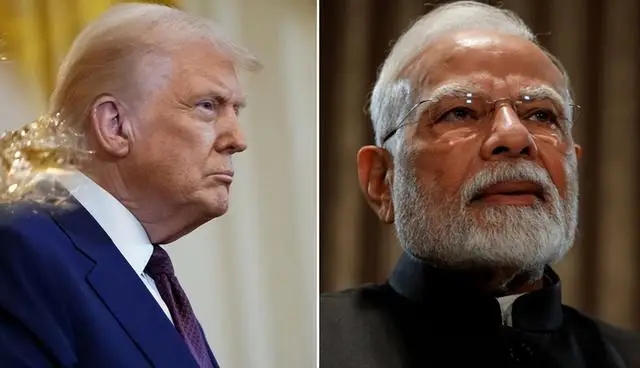
Indian statistics show that while exports to the US are declining, trade with other markets is rapidly increasing. Experts at the Global Trade Research Initiative point out that India and Russia should continue to act in their own interests and not be influenced by the actions of third countries. In other words, India's economy is maintaining a self-centered strategy, maintaining a steady pace and resisting external pressure. Even if the US threatens to use tariffs as a long-term or even permanent measure, India has already paved the way for retaliation.
It appears that US policies have created friction but not destruction. Trump sought to control India through tariffs, but India has chosen diversification, flexibility, and internal incentives. On the chessboard of the global economy, the US's actions are like a direct smash, while India's strategy involves quietly shifting pieces to rebalance the overall situation. Adjusting the export structure isn't just a numbers game; it involves a comprehensive restructuring of the industrial chain, logistics, and market strategies.
Analysis by economists and Think Tank confirms this. The IMF predicts that India's economic growth rate will still reach 6.6% in 2026, 0.1 percentage point higher than in 2025. Trump's tariffs have, to some extent, acted as a catalyst—forcing Indian companies to reassess their market layout, diversify their exports, and accelerate integration with global markets. The economic penalties Trump sought ultimately led to a strategic upgrade in India's foreign trade.
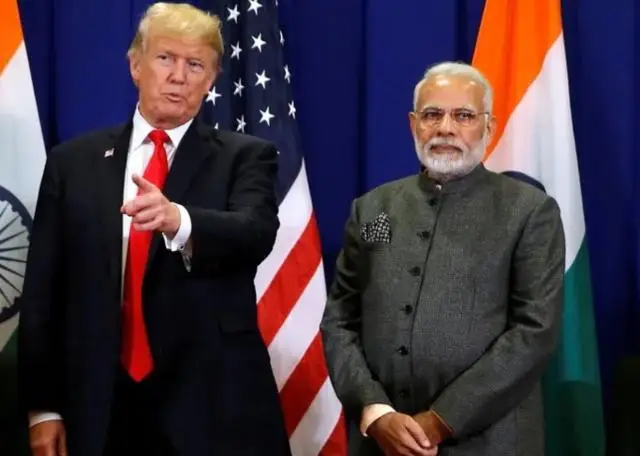
The Indian government's measures go beyond market diversification and also include improving domestic transportation, logistics, and trade infrastructure, stimulating domestic demand, and supporting the development of small and medium-sized enterprises. This series of actions has helped to quickly absorb the negative impact of the tariff shock. Indian exporters are learning how to survive and thrive under policy pressure, and these capabilities will become a long-term competitive advantage. While US unilateral protectionism has created problems, it has unexpectedly stimulated India's resilience and market resilience. During this process, India's response strategy has demonstrated remarkable resilience. Declining exports to the US present both a challenge and an opportunity. Actively exploring global markets is gradually reducing the risks of dependence on the US market. India's export portfolio has become more balanced and resilient. Trump's "tariff offensive" has been skillfully transformed by India into a new engine of growth amidst the complex dynamics of the global trade landscape.
A closer look reveals that this trade conflict is not simply a matter of numbers, but also a strategic contest. India has responded to challenges through policy tools and market diversification, not only stabilizing economic growth but also gaining experience in global markets. In the future, India may develop a more stable export system, reducing its reliance on the policy fluctuations of a single major power. This is a quiet strategic counterattack and a manifestation of economic wisdom.
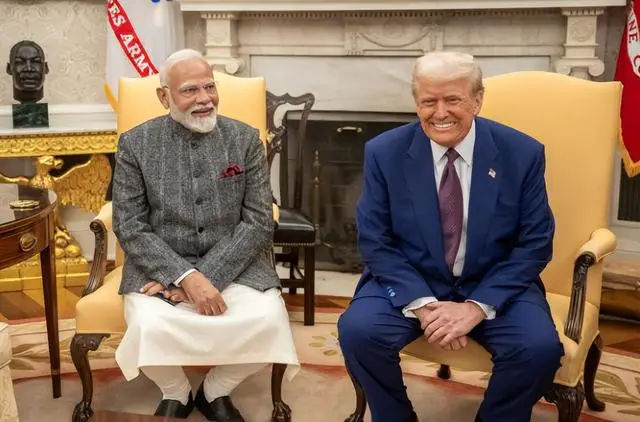
Trump's tariffs have struck like a thunderbolt, while India's exports have steadily flourished amidst the turmoil. Short-term declines in figures cannot mask the achievements of long-term strategic adjustments. India, through flexible adaptation and diversified strategies, has transformed pressure into opportunity and shocks into motivation, offering the world a glimpse of another possibility: in the face of power and pressure, careful, calculated wisdom can defuse crises and open up new export markets.
This seemingly simple tariff war actually reflects the dynamics of global trade. India is demonstrating to the world through its actions that economic resilience and strategic wisdom are often more powerful than mere policy pressure. Trump's tariff offensive has failed to halt India's economic growth, but it has left a significant strategic mark on the global trade landscape.