What is a Lantern?
Lantern, also known as a palace lantern, is a distinctive traditional Han Chinese handicraft.
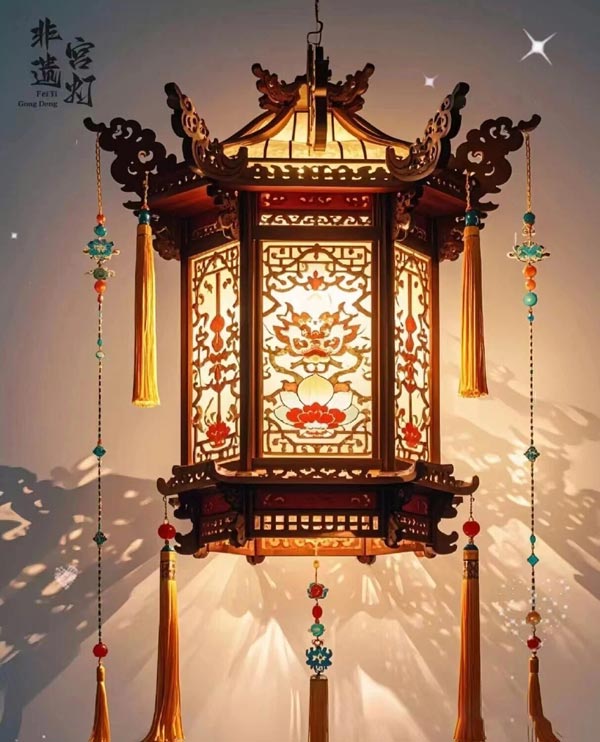
Lantern has a history of over a thousand years in China and has become a symbol of traditional Chinese culture, enjoying global renown.
To this day, lantern-shaped decorations can still be found in some luxurious palaces and residences.
Origin of Lantern
Lantern originated in the Eastern Han Dynasty and flourished during the Sui and Tang Dynasties.
According to legend, Emperor Guangwu of the Eastern Han Dynasty, Liu Xiu, established his capital in Luoyang and unified the country. To celebrate this achievement, he decorated the palace with lanterns and held a grand banquet, each of which displayed a dazzling array of lanterns. The name "Lantern" thus originated.
On the fifteenth day of the first lunar month in the first year of Emperor Yang of the Sui Dynasty's Daye reign, a variety of performances were held in Luoyang, and lanterns were displayed throughout the city. The entire city was decorated with lanterns and lanterns for half a month.
After the Sui and Tang dynasties, during the Lantern Festival, every household hung precious lanterns, each ablaze with dazzling brilliance, each vying for attention with its own splendor.
This custom spread throughout the country and even abroad, and the art of lantern making also spread from the imperial court to the common people.
Lantern Shapes
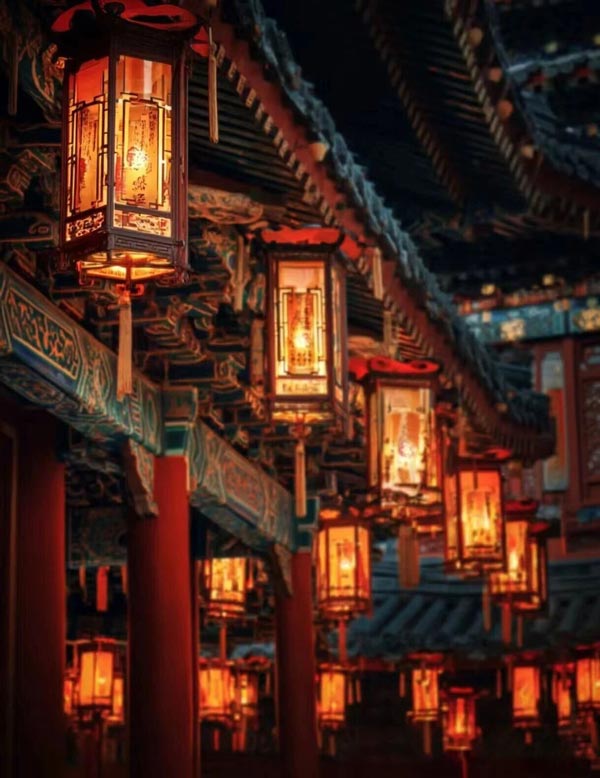
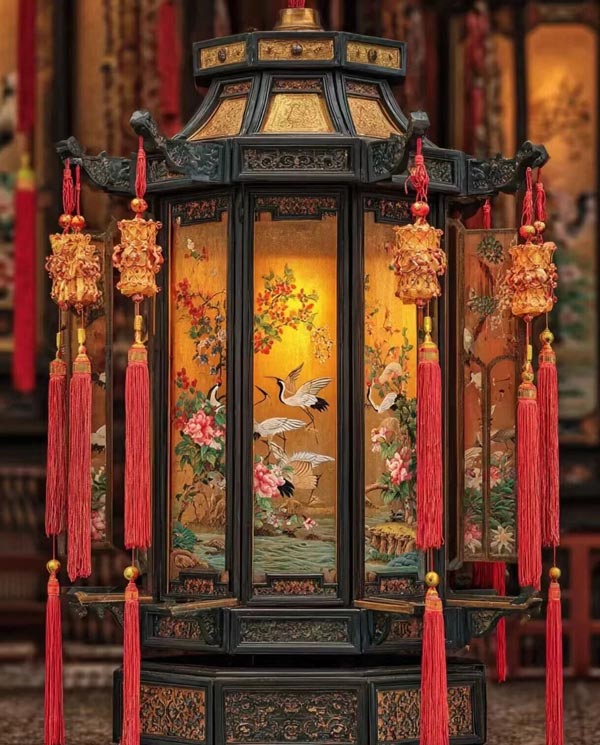
Lanterns were used in the imperial palace, primarily constructed from fine wood, inlaid with silk and glass, and painted with a variety of designs.
They were renowned for their elegance and royal grandeur. Due to their long-standing use in the imperial court, they not only provided illumination but also featured intricate decorations to showcase the emperor's wealth and extravagance.
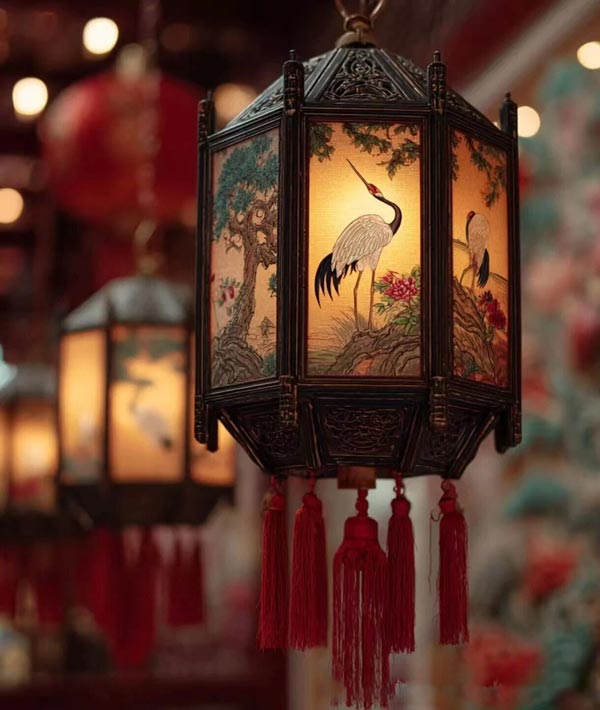
Traditional lanterns were octagonal, hexagonal, and quadrangular in shape, with designs on each screen often depicting auspicious symbols such as dragons and phoenixes, longevity, and good fortune.
Main Types of Lanterns
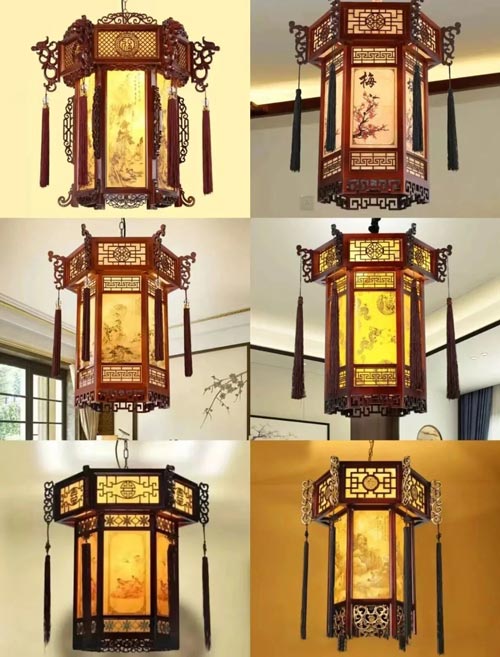
- Hexagonal/Octagonal Lanterns: The most common and classic styles, with hexagonal or octagonal shapes.
- Flower Basket Lantern: Resembling a flower basket, beautifully designed.
- Square Lantern/Globe Lantern: Variations of other geometric shapes.
- Zouma Lantern: A special type of lantern that uses thermal energy to rotate the image within. Strictly speaking, the Zouma Lantern is a form of lantern or utilizes the decorative technique of the lantern.
- Floor Lamp/Hanging Lamp/Table Lamp: Distinguished by placement.
The Heritage of Lanterns
In traditional Chinese culture, light represents warmth and hope.
The lantern was introduced by the royal family to the common people. From the traditional octagonal, hexagonal, and square lanterns, it evolved into a variety of forms, including sphere lanterns, gourd lanterns, and fish lanterns.
It is both a custom and a cultural gesture, symbolizing people's yearning and pursuit for a better life.