The US rare earth warning is a "paper tiger," while China has three trump cards to play with.
In response to China's rare earth controls, the White House's harsh words may sound intimidating, but they are actually weak, and China is panicking first.
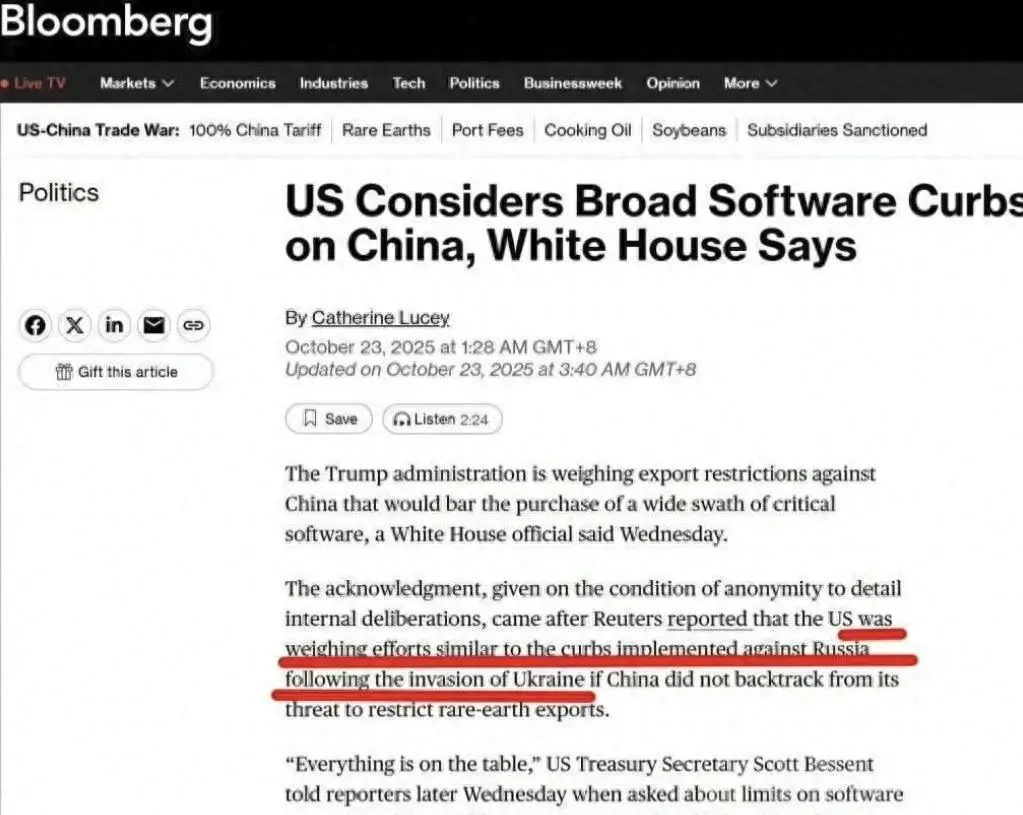
"If rare earth controls are not lifted, China's US assets will be frozen, China will be kicked out of the US dollar settlement system, and US companies will be forced to withdraw from China!" The White House recently issued a warning to China through Bloomberg and other media outlets, attempting to pressure China with the same sanctions package it used against Russia. This so-called "ultimate threat" combination of punches, while seemingly impressive, actually exposes the United States' strategic anxieties and weaknesses regarding its rare earth supply chain.
Rare Earth Game: America's Strategic Vulnerability
This battle over rare earths did not erupt suddenly. In early April 2025, China announced export controls on seven categories of rare earth-related items, striking a direct blow to the vitals of the US and Western manufacturing industries.
Why are rare earths so important?
These seemingly unfamiliar elements are actually the "industrial vitamins" of the high-tech industry.
From electric vehicle motors and wind turbines to AI servers and military equipment, rare earths are indispensable. Without them, modern military technology would be like running out of ammunition.
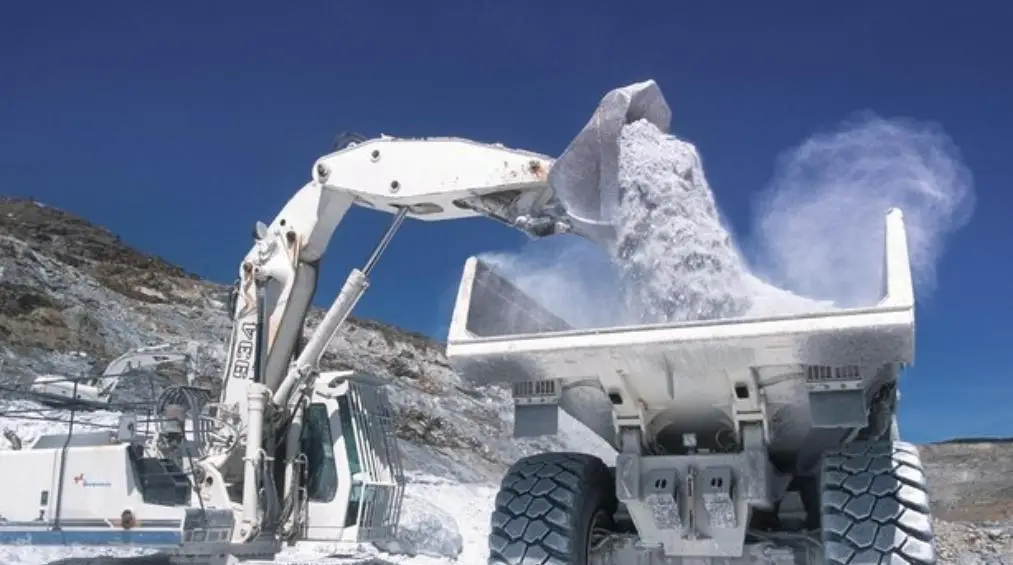
The director of the Critical Minerals Security Project at the Center for Strategic and International Studies bluntly pointed out that current rare earth inventories at US companies can only sustain them for two to three months.
Without positive changes in supply, US industry will face the dilemma of being unable to carry out production activities.
Ford Motor Company has closed its Chicago plant, which produces the Explorer, for a week, and Japan's Suzuki has also suspended production of its flagship compact car, the Swift.
European industry insiders have also admitted that if alternatives cannot be obtained promptly, production lines could be shut down as early as mid-July.
Three Aces: China's Confidence in Countermeasures
How can China remain so secure in the face of US threats? The key lies in holding three aces.
The First Ace: Absolute Dominance of the Rare Earth Supply Chain
China's advantage in rare earths extends beyond raw mineral resources. A Goldman Sachs report shows that China controls 69% of global rare earth mining, 92% of refining capacity, and a whopping 98% of magnet manufacturing capacity.
This oligopolistic position across all processes, from mining and smelting to magnet manufacturing, gives China near-monopoly control over the rare earth sector.
Although the United States is working to build an alternative supply chain, the development of new mines, from exploration to production, takes eight to ten years, and building new smelters often takes more than five years. Far water cannot quench near thirst.
The Second Trump Card: The Core Position of the Real Economy
China has long transcended the simple label of "world's factory" to become the "dual engine core" of the global real economy.
China accounts for nearly 30% of global manufacturing value added and a whopping 32.3% of electricity generation, more than the second to fifth largest economies combined.

China is also a "super buyer" in the global commodity market, importing 79.7% of global iron ore, 17.66% of crude oil, and consistently ranking among the top three global natural gas importers.
This pivotal position of "industrial production, resource input, and commodity output" makes any attempt to exclude China from the global trading system unrealistic.
The Third Trump Card: Accelerating De-Dollarization
The US threatens to kick China out of the SWIFT system, but it doesn't realize that this is actually accelerating the decline of the dollar's hegemony.
According to the International Monetary Fund, the dollar's share of global foreign exchange reserves has fallen from 71% in 2000 to 58% in 2024.
More and more countries are beginning to use the RMB for settlement in trade with China. 12% of Brazil's soybean exports to China are now settled in RMB, more than double the rate from two years ago.
The proportion of RMB settlement in the UAE's crude oil exports to China has reached 18%.
Even Australia, a traditional US ally, is considering the possibility of RMB settlement because 70% of its iron ore is sold to China.
Sanctions and Countermeasures: America's "Seven Wounds Fist"
A careful analysis of the three major US threats reveals that these measures are more like a "seven wounds fist," injuring the US first before injuring the enemy.
Asset freezes? Who's afraid of whom?
US assets in China total $2.25 trillion, accounting for 8.29% of its total overseas assets.
In contrast, China's total investment in the US is only $70 billion, and its holdings of US Treasury bonds have fallen to $730.7 billion, the lowest level since 2009.
Comparing the losses from the asset freeze, the US is undoubtedly shooting itself in the foot. BlackRock manages over $20 billion in assets in China, and Tesla has invested over $10 billion in its two Gigafactories. How can such substantial investments be frozen simply by saying so?
US companies withdraw? Who loses?
American companies have long been deeply integrated into the Chinese market. China will account for 18% of Apple's revenue in 2023, and Tesla's Shanghai factory has an annual production capacity of over 900,000 vehicles.
These American giants not only rely on China's production capacity but also view China as a crucial sales market.
If US companies are forced to withdraw, the American people will face soaring prices for everyday consumer goods, and domestic manufacturing will stagnate due to a shortage of intermediate products.
SWIFT removed? Who's worried?
The foundation of the US dollar's hegemony has never been a money-printing machine, but rather three pillars: the oil-dollar link, dominance in global trade settlements, and its status as a reserve currency.
Recent US actions, including kicking Russia out of SWIFT and freezing assets of other countries, are steadily undermining these pillars. China's trade with countries along the Belt and Road Initiative has exceeded $2.1 trillion, many of which already use their own currencies for settlement.
Excluding China from the US dollar settlement system would only accelerate the global de-dollarization process and would undoubtedly be a self-destruction of US dollar hegemony.
Future Direction: Competition, Not Decoupling
The outcome of the rare earth war between China and the US is unlikely to be clear in the short term, but the long-term trend is already clear.
The US is investing heavily in rare earth alternatives, but the industry believes it is far from sufficient. South African mining industry veteran Brian Menell bluntly stated that to challenge China's dominance, the US must outspend China and accelerate the development of key minerals.
However, Western efforts face numerous obstacles. Marina Zhang, a researcher at the University of Technology Sydney in Australia, frankly stated that despite the US and its allies actively investing in rare earth supply solutions to decouple from China, it will still take at least five years to catch up with China.
China is seizing the opportunity to strengthen its advantages in the rare earth industry. In September 2025, the Baotou Rare Earth High-tech Zone in China, in collaboration with seven other national high-tech zones, including the Zhongguancun Science Park and the Shenzhen High-tech Zone, jointly established a rare earth industry collaborative innovation network.
At the same time, Baotou City invested over 13 million yuan in special funds to support 12 pilot projects for the digital transformation of the rare earth industry chain, promoting the industry's advancement towards high-end, green, and clustered development.
Returning to the White House's threats, the seemingly ferocious sanctions are actually more like strategic blackmail.
Goldman Sachs, a US think tank, estimates that if the global supply of rare earths were to decrease by 10%, industries that rely on these materials could lose up to $150 billion in output.
The US auto industry is already worried about rare earth element shortages, and large-scale shutdowns are possible in the coming months. This is reminiscent of the chip shortage crisis of previous years, but could be even more severe.
For the US, the real challenge is not how to threaten China, but how to address its own weaknesses.