
Recent calculations by a Cornell University physicist using the latest dark energy data suggest the universe may have a lifespan of about 33 billion years and is currently near the midpoint of this lifespan.
The results suggest that the universe will continue to expand for about 11 billion years before beginning to contract and ultimately collapsing into a single singularity in a violent "Big Crunch."
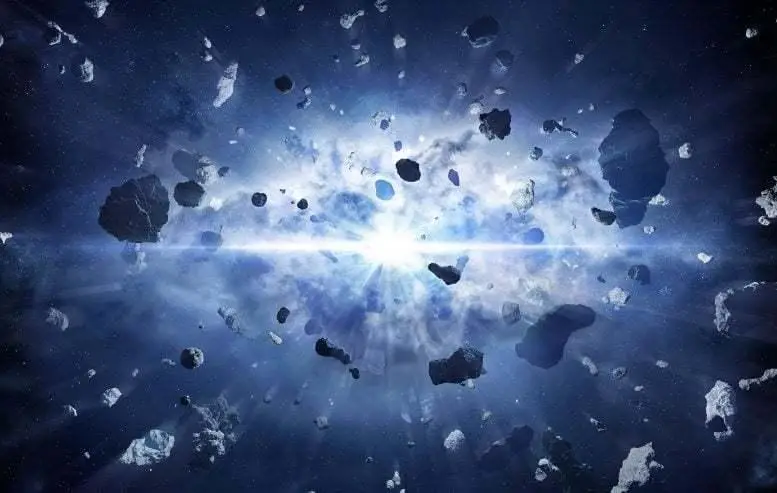
The study, led by Henry Tye, Professor Emeritus of Physics and the Horace White Professor of Physics in the College of Arts and Sciences, reached this conclusion by updating theoretical models that incorporate the "cosmological constant," a concept first proposed by Albert Einstein over a century ago and now widely used by modern cosmologists to describe the expansion of the universe.
"For the past 20 years, people have assumed that the cosmological constant is positive, meaning the universe will expand forever," said Henry Tye. "But new observational data suggest that the cosmological constant may be negative, meaning the universe will eventually end with a 'Big Crunch.'"
The study was recently published in the Journal of Cosmology and Astroparticle Physics.
Predicting the Fate of the Universe
The universe is currently approximately 13.8 billion years old and continues to expand. Henry Tye points out that the future fate of the universe depends on the sign of the cosmological constant: if it is positive, the universe will expand infinitely; if it is negative, the universe will reach a maximum volume and then begin to contract, eventually collapsing completely. His calculations support the latter scenario—that the universe will shrink to zero volume in the distant future, marking the complete end of space-time itself.
This is exactly the conclusion Henry Tye has reached based on his latest model. "This 'Big Crunch' defines the end of the universe," Henry Tye wrote. According to models, this event is expected to occur approximately 20 billion years from now.
New Data from Dark Energy Observations
This year's major scientific advances came from reports released this spring by the Dark Energy Survey (DES) in Chile and the Dark Energy Spectroscopic Instrument (DESI) in Arizona. Henry Tye noted that the observations from these two observatories, located in the southern and northern hemispheres, respectively, were highly consistent. Their core objective was to test whether dark energy, which accounts for 68% of the universe's total mass-energy, truly originates from a pure cosmological constant. However, observations suggest that the universe is not merely driven by a single, unchanging cosmological constant; dark energy itself appears to exhibit more complex dynamical behavior.
In their paper, Henry Tye and his collaborators proposed a hypothetical model of extremely low-mass particles: particles that behaved like the cosmological constant in the early universe but no longer do so today. This simple model fits existing observations well, while pushing the underlying cosmological constant into negative territory. "It's been suggested before that if the cosmological constant is negative, the universe will eventually collapse—that's not new," said Henry Tye. "But our model further specifies when and how the universe will collapse."
Observational Progress and the Future of Cosmology
Henry Tye emphasized that more observational data is still being acquired. Hundreds of scientists around the world are measuring dark energy by observing millions of galaxies and their distances, gathering more precise data to refine theoretical models. The DESI project will continue to operate for another year, while several new generation observatories, including the Zwicky Transient Facility in San Diego, the European Space Agency's Euclid space telescope, NASA's recently launched SPHEREx mission, and the soon-to-be-operated Vera C. Rubin Observatory (named after Vera Rubin, a 1951 master's graduate), are also conducting or about to begin related observations.
Henry Tye believes that being able to provide a quantitative estimate of the universe's age is an encouraging development. “Understanding where life begins and ends is key to understanding life itself,” he said. “The same is true for our universe. In the 1960s, we confirmed that the universe had a beginning; the natural next question was: does it have an end? For many years, many people believed that the universe would continue forever. Now it seems that if the data holds up, the universe will indeed end—and that in itself is a profound breakthrough.”