
WindowsCentral has reported further details on Microsoft's next-generation Xbox console, stating that it will be the first to completely eliminate traditional paywalls for multiplayer games while providing a premium gaming experience.
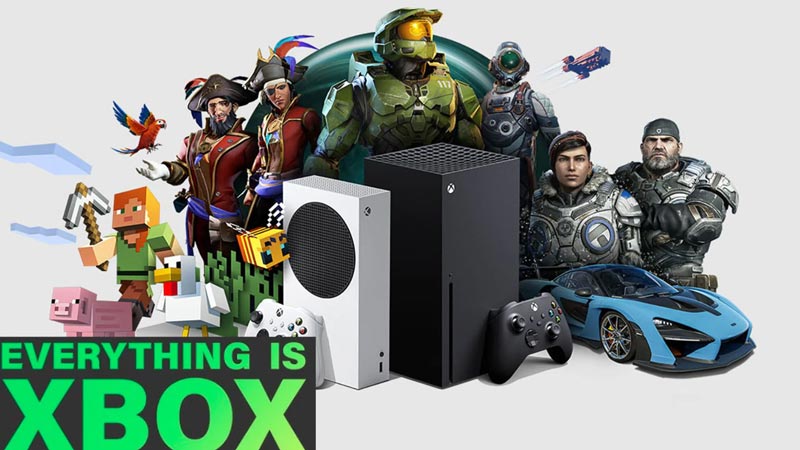
WindowsCentral's insider information:
The next-generation Xbox will be a custom-built Windows gaming PC capable of running all Windows-based games, including Sony's first-party titles "God of War Ragnarok" and "Ghost of Tsushima," as well as PC games on Battle.net.
The next-generation Xbox will be a custom-built Windows gaming PC capable of running your entire library of native console games. The next-generation Xbox will indeed feature a fully functional Windows operating system, providing a console-style experience optimized for TV.
Indeed, Xbox Ally, Xbox Ally X, and the Xbox Fullscreen experience are essentially what the next-generation Xbox will look like. It's no different from the SteamOS interface and Big Picture mode (which allows you to exit to a full Linux system at any time). Similarly, the "Xbox Fullscreen Experience" allows you to exit to a full Windows system when needed and run games from other platforms, such as Steam, the Epic Games Store, Microsoft's own Battle.net, the Riot client, or whatever software you want. In fact, you can even run Adobe CC or Microsoft Office on the next-generation Xbox if you choose.
However, what sets this new Xbox apart from a traditional Windows PC is that it will retain the traditional console experience right out of the box. The initial setup process will be similar to that of existing Xbox consoles. If you prefer, you can stay in the Xbox ecosystem and never touch Windows. The ability to exit to Windows is intended for players who want to play games not traditionally available on Xbox, such as PlayStation ports on Steam, keyboard-based games like League of Legends, and classic games from platforms like GOG.
On the next-generation Xbox, you'll be able to play PC-released PlayStation titles like God of War Ragnarök, Ghost of Tsushima, and Marvel's Spider-Man Remastered (available through Steam or Epic). You'll also be able to play World of Warcraft via Battle.net. In fact, almost any game that runs on Windows will be available to install and play on this console—meaning decades of gaming content will be unified on the same device.
Plays Backward Compatible Xbox Games from All Generations
Furthermore, thanks to AMD's new chip, the next-generation Xbox will also run all games currently available in the Xbox Series X|S library. This means all Xbox Backward Compatible games, all Xbox 360 Backward Compatible games, all Xbox One Backward Compatible games, and all current and future Xbox Series X|S games. These games will run natively on the new Xbox and launch seamlessly from the library in the Xbox Launcher.
As with any new console generation, developers are expected to continue supporting the Xbox Series X|S development environment for several years after the new Xbox launches. Over time, more and more games will receive native versions for the next-generation Xbox, tailored to their specific configurations. AI-powered technologies like automatic super resolution and next-gen framerate generation will make Xbox Series X|S games run faster on the new hardware, but developers can also choose to directly support the new consoles with Xbox Play Anywhere versions and Xbox's Smart Delivery technology.
The new technologies Microsoft is developing, combined with the inherent "fixed" nature of the hardware, should eliminate many of the inconveniences that sometimes come with PC gaming. For example, operations like compiling shaders should not be a problem on the new Xbox. Microsoft is also exploring other ways to reduce Windows overhead to benefit all PC gamers, regardless of Xbox usage.
Speculation: What happens to Xbox Game Pass and PC Game Pass in this scenario? How much will it all cost?
One issue Microsoft is still working on relates to Xbox Game Pass. Currently, PC Game Pass includes all launch Xbox games, including Call of Duty, and is significantly cheaper than Xbox Game Pass Ultimate for consoles. If the next Xbox is a PC, should I use PC Game Pass on PC instead of Xbox Game Pass Ultimate?
I've heard that the current plan is to remove the paywall for multiplayer on the next Xbox. Offering paid multiplayer functionality on a "PC" makes little sense, especially since it would greatly incentivize players to install Steam directly instead of using the Xbox ecosystem for online gaming. However, whether this plan actually comes to fruition remains to be seen.
I expect we'll see PC Game Pass rebranded in some way. On the Xbox Game Pass website, "PC Game Pass" is deemphasized, practically hidden beneath the three main tiers. Considering that both Xbox Game Pass Standard and Premium currently include some PC games, I wouldn't be surprised to see this name abandoned in the future. In an era of convergence between Xbox consoles and PCs, the idea of offering Game Pass per device makes little sense. But we'll have to wait and see how this plays out.
So what about the price?
Xbox President Sarah Bond recently warned that the next Xbox will offer a high-end experience, which may suggest it will cost more than before.
In theory, the next-generation Xbox should still be more affordable than a gaming PC of comparable performance. Economies of scale and bulk purchasing agreements with companies like AMD will help keep costs down, as Microsoft won't have to pay for Windows licenses outright. Microsoft's upfront investment in the Xbox ecosystem also helps subsidize costs. Despite the Xbox's availability on other storefronts, most casual gamers will continue to make the majority of their games and purchases within the Xbox ecosystem.
Many popular Xbox games, such as Fortnite, Roblox, and Minecraft, are not currently available on Steam and likely won't be in the near future. You can expect Battle.net games like World of Warcraft to come to Xbox in the future. Although Blizzard's Diablo and Overwatch are already available on Steam, the vast majority of users remain on Battle.net.
Microsoft offers developers a more favorable tax rate on its PC store, 12% (compared to Steam's 30%). This policy will reportedly continue to apply to developers developing games for the Xbox PC ecosystem, providing a strong incentive. However, this may reduce the amount of subsidies Microsoft traditionally provides for its own hardware. I think the next-generation Xbox will be more expensive than the PS6, but it will likely still be the most cost-effective way to get into PC gaming on the market. And there are other factors that could make it even more affordable.
Analysis: This is a risky strategy with potentially huge payoffs if executed well.
The Xbox Ally experience is essentially a public beta test of how all these features will work. Today, if you connect an Xbox Ally X with a Z2 Extreme processor to your TV, you're testing the next-generation Xbox.
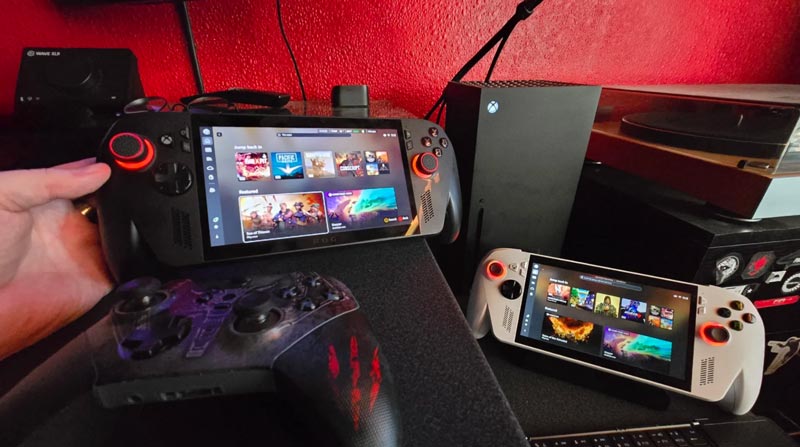
The downside of Xbox Ally—at least for traditional Xbox console owners—is that it lacks the full console game library. While the number of "Xbox Play Anywhere" games (games licensed for both PC and console) is at an all-time high, most AAA publishers haven't fully embraced the ecosystem yet. Over time, this model could become the industry default, especially on PC, where publishers can take an 88% cut, compared to the 70% on consoles. Given this trend, it's not hard to imagine PlayStation launching its own PC client directly on the next-generation Xbox platform, allowing them to take 100% of the revenue, rather than Steam's 70% or Epic's 88%.
Of course, the key lies in execution. The current Xbox Ally experience isn't perfect. Strange Windows issues persist, such as user account control pop-ups, Windows Phone games inexplicably appearing in the game library, a lack of community features for players and developers, and a lack of organic developer support—these remain key challenges for the Xbox PC ecosystem. Since Microsoft's renewed focus on PC gaming, things have improved significantly, but how quickly Microsoft can transform this "decades-old program spaghetti" (Windows) into a comfortable, TV-centric experience remains uncertain.
Currently, the Xbox app on Xbox Ally still suffers from sluggish response times and unstable multitasking. However, there's no strict timeline pressure on the next-generation Xbox. According to my understanding, Microsoft's target release date for the next-generation Xbox hardware is 2027. By then, the experience must be completely polished, and all the kinks must be ironed out. And those "kinks" are no small number.
In short, no manufacturer has ever attempted anything like this on such a large scale. Valve is currently developing its own "game console"—a "game console" experience based on Steam OS, aiming to run both PlayStation and Xbox games on a single device. The Xbox's advantage is that it still offers direct access to some of the world's most popular games, such as Minecraft, Fortnite, and Roblox, and has system-level (kernel-level) anti-cheat mechanisms—something Steam OS still struggles with in some competitive multiplayer games. Of course, these advantages are not insurmountable for Valve to catch up to in the long run.
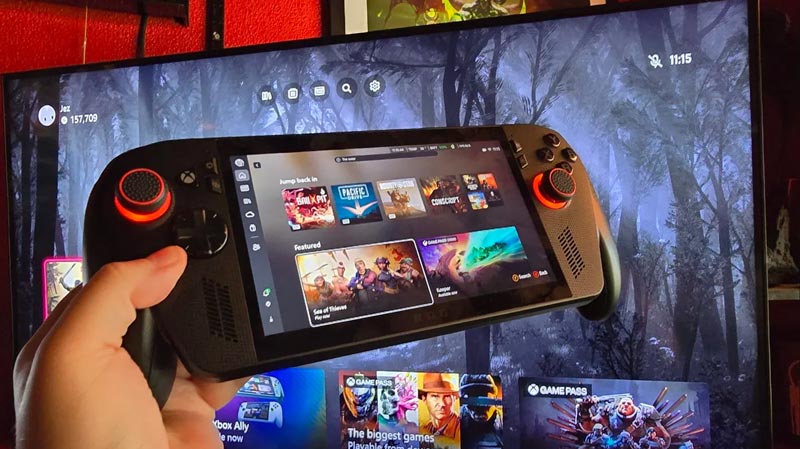
In theory, the next-generation Xbox will have more games and content than any other gaming console in history—not only will it run games locked to the Xbox ecosystem, but it will also offer full access to all PC gaming platforms and launchers worldwide.
However, many questions remain unanswered, and perhaps only time will tell. Do gamers really want this open experience? Will such a system be simple and fluid enough for those accustomed to the "plug-and-play" experience of a console? Will the price remain affordable despite the high-end hardware? Without the traditional selling point of "exclusive content," will gamers feel they're missing out on some unique value? Besides Microsoft's own Xbox, will OEMs like ASUS or Razer participate by releasing more affordable versions, or conversely, by creating more expensive, ultra-premium models?
In any case, Microsoft's next-generation plans are completely upending the traditional rules. It's exciting to see how this all pans out.