
In the notorious scam parks in Myanmar, the buildings appear no different from ordinary structures at first glance. However, a closer look at the rooftops reveals densely packed rows of neat, rectangular white receivers.
These receivers are Starlink terminals from Elon Musk's SpaceX company, serving as the infrastructure for large-scale telecom fraud operations within the parks.
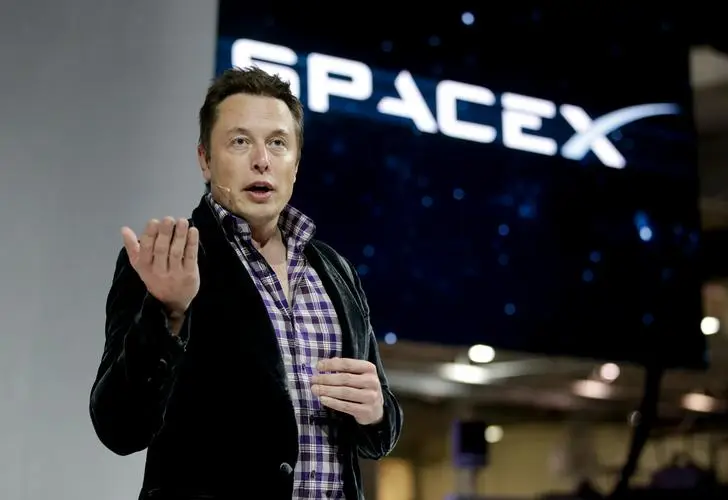
Recently, SpaceX announced that Starlink was being widely abused in multiple scam parks along the Myanmar border, and the company has identified and disconnected the network connections of over 2,500 devices.
Previously, data from the Asia Pacific Network Information Centre (APNIC) showed that Starlink surged to become Myanmar's largest internet provider between July and September. Data shows that Starlink currently holds the second-largest market share at 12.37%, second only to Myanmar's national telecommunications company's 13.7%.
So, why hasn't Starlink, as a new satellite communication technology, brought significant improvements to the communication network experience for ordinary people, but instead instead become prevalent in fraud rings?
Starlink Used for Telecom Fraud
SpaceX's Starlink, by deploying tens of thousands of low-Earth orbit satellites, aims to break the limitations of terrestrial infrastructure-based network services, providing users with high-speed, low-latency internet access.
However, what many didn't expect was that Starlink would become an accomplice to telecom fraud. This is because, previously, "disconnecting from the internet" could effectively restrict the operation of fraud rings; now, Starlink's global coverage and anonymity make it difficult for regulatory authorities to track and combat these illegal activities.
It is understood that due to the instability of internet services in Myanmar, approximately 3,000 Starlink devices have been active over the past year. Although they are not authorized to use them, at least eight telecom fraud rings in the Myawaddy area have deployed Starlink. In the "KK Ring" alone, there are 80 Starlink satellite antennas on the roof of one building.
Recently, the Myanmar Armed Forces conducted a raid on telecom fraud rings in the country's border region, searching over 100 buildings and seizing 30 Starlink receivers and accessories. Reports indicate that although Starlink service is not licensed for use in Myanmar, Starlink devices can be easily purchased online and then shipped to "restricted" areas. Some internet service providers are reportedly selling Starlink devices specifically to scam operation sites.
In July, U.S. Democratic Senator Maggie Hassan wrote to Elon Musk, urging him to take measures to prevent criminal groups from using Starlink for scams. On October 14th, a U.S. Congressional committee stated that it had begun investigating whether Musk's Starlink company provided internet services to scam operation sites in Myanmar.
Regarding the use of Starlink devices for telecom fraud, SpaceX's Vice President of Starlink Operations, Drell, recently stated on social media that SpaceX proactively identified and disabled over 2,500 Starlink devices around suspected scam centers in Myanmar.
SpaceX has established policies to ensure Starlink service is used in approved areas, and will take appropriate action against any violations.
"Satellite communication will bypass all existing regulations."
The concept of satellite communication can be traced back to 1945, when British science fiction writer Arthur Charles Clarke proposed the scientific idea of using communication satellites to achieve global communication. In 1962, AT&T used satellites to provide intercontinental telephone and television services.
Low Earth Orbit (LEO) satellite communication dates back to the 1980s, with commercial LEO satellite projects such as Iridium and Globalstar proposing to provide communication services via low Earth orbit satellites. However, due to technological and market factors, large-scale application has not been possible.
Currently, Starlink is the most mature and commercially successful LEO satellite internet project globally. The project began in January 2015 when Musk announced SpaceX's plan to launch approximately 12,000 communication satellites into orbit, with operations commencing in 2020.
Latest data shows that Starlink has launched 9,978 satellites, with approximately 8,656 currently in orbit. These satellites are distributed at low Earth orbit altitudes of about 540 to 570 kilometers.
Unlike terrestrial communications that rely on base station coverage, Starlink achieves data transmission through inter-satellite laser links and ground terminals, theoretically providing network speeds exceeding 100 Mbps. Furthermore, low-Earth orbit satellites can achieve virtually seamless global network coverage, especially in remote areas, oceans, and mountainous regions where terrestrial networks are ineffective.
Yang Shaoshi, a leading professor and doctoral supervisor at the School of Information and Communication Engineering, Beijing University of Posts and Telecommunications, told Sohu Technology that satellite communication essentially bypasses all current regulations. Traditionally, making a phone call involves passing through a cell tower and then a server in the city, all of which are regulated. If a phone connects directly to a satellite, these existing regulatory processes are disrupted.
For a long time, fraud rings have relied on local telecom operators to operate, making them highly dependent on electricity and terrestrial network communications. Because Starlink bypasses terrestrial infrastructure, actions to cut off traditional communication networks through power outages or disconnections become ineffective. Even without internet or power, the scam site can maintain operations using generators and solar panels, and continue network communication services via Starlink.
What is the current state of low-Earth orbit satellite communication?
While Starlink is widely used by scammers, satellite communication remains relatively unfamiliar to many ordinary people.
According to data provided by SpaceX in August, Starlink currently provides high-speed internet service to over 7 million people in more than 150 countries and regions. These users are primarily residential/fixed-line business users, with major markets in the United States, Canada, Australia, New Zealand, and Europe.
Currently, using the Starlink satellite network requires a terminal measuring 59cm long and 38cm wide for signal transmission and reception. According to Musk's latest vision, SpaceX aims to achieve high-bandwidth communication directly between satellites and mobile phones within two years.
Last month, SpaceX announced that it had agreed to purchase approximately $17 billion worth of EchoStar's wireless spectrum resources for its Starlink satellite network. Musk explained that these frequency bands will enable SpaceX to provide high-bandwidth connections directly to mobile phones via satellite.
Musk stated that SpaceX needs to collaborate with mobile phone manufacturers to modify the hardware of their phones, altering the chipsets to add the corresponding frequency bands. This process is expected to take approximately two years, with phones supporting direct connection to the Starlink network anticipated to begin shipping in two years. At that time, users will no longer need cumbersome signal terminals and can access the internet anytime, anywhere via satellite.
The development of satellite communications undoubtedly provides users with a guarantee of enjoying network services anytime, anywhere. However, considering Starlink's use in telecom fraud, its network coverage advantage has ironically become an "accomplice" to fraudsters, while also posing new challenges to regulatory governance.