
In manufacturing and logistics sorting, intelligent robots are reshaping production models with astonishing efficiency. Take UBTECH's Walker S2 humanoid robot as an example: it can autonomously perform battery swapping and continuous operation in a 42°C environment, achieving zero-defect quality control and 24/7 operation. In these process-oriented scenarios, robots, with their standardized execution capabilities, have liberated traditional human labor from repetitive tasks, becoming a crucial productive force in the Industry 4.0 era.
The transformation in the medical field is equally significant. Fudan University's "Terminal Disorder" AI-assisted diagnostic tool, through big data analysis and pattern recognition technology, improves the triage efficiency of non-emergency medical needs by 40%. This functional substitution excels in deterministic tasks, but the core value of medical services goes far beyond this. Data from a Japanese pilot program for elderly care robots shows that 78% of surveyed elderly people still insist on choosing human caregivers, highlighting the irreplaceable nature of emotional companionship and biological empathy.
The delineation of the boundary between ethics and decision-making is even more crucial. The EU's Artificial Intelligence Act explicitly stipulates that in autonomous driving scenarios involving ethical dilemmas such as the "trolley problem," the final decision-making power must be in human hands. Similarly, fields like psychological counseling and end-of-life care require a deep understanding of life experiences, where the limitations of AI are clearly exposed. Technological development must always adhere to humanistic principles; this has become a global consensus in the intelligent industry.
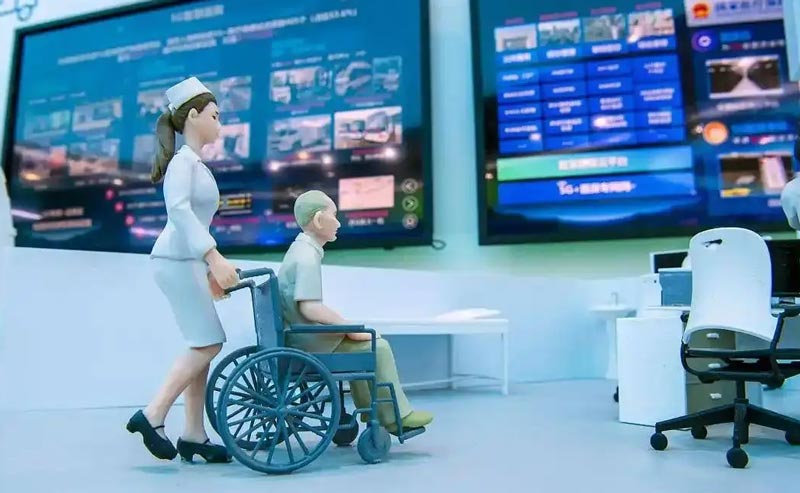
The evolution of the industrial chain confirms the deep logic of human-machine collaboration. Global shipments of humanoid robots are projected to reach 11,900 units by 2025, with the localization rate of core components increasing to 45%, marking a new stage in technological maturity. This development is essentially a symbiotic model of "machine execution, human control"—robots handle physical labor and data processing, while humans focus on innovative decision-making and value judgments. iFlytek's "Super Brain 2030 Plan" is a practical application of this concept, enhancing rather than replacing human capabilities through technological empowerment.
The current human-machine relationship has formed a dynamic equilibrium framework: in the realm of standardization, robots are revolutionizing efficiency; in the realm of emotion and ethics, humans maintain their central position; and at the level of technological empowerment, both parties are constructing a value reconstruction system.
This four-dimensional symbiotic model avoids both the extreme predictions of technological threats and the illusions of blind optimism, providing a robust path for humanity to steadily enter the intelligent era. The deep integration of industrial upgrading and technological innovation is writing a new chapter in human-machine collaboration.